

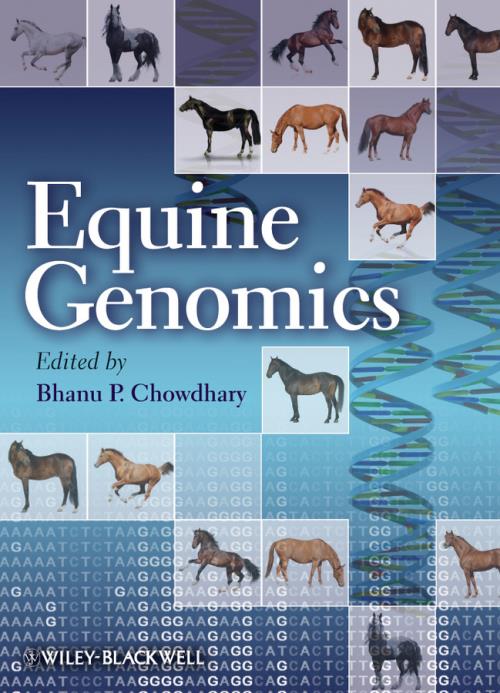
Analysis of the equine genome began just over a decade ago, culminating in the recent complete sequencing of the horse genome. The availability of the equine whole genome sequence represents the successful completion of an important era of equine genome analysis, and the beginning of a new era where the sequence information will catalyze the development of new tools and resources that will permit study of a range of traits that are economically important and are significant to equine health and welfare.
Equine Genomics provides a timely comprehensive overview of equine genomic research. Chapters detail key accomplishments and the current state of research, as well as looking forward to possible applications of genomic technologies to horse breeding, health, and welfare. Equine Genomics delivers a global overview of the topic and is seamlessly edited by a leading equine genomics researcher.Equine Genomics is an indispensible source of information for anyone with an interest in this increasingly important field of study, including equine genomic researchers, clinicians, animal science professionals and equine field veterinarians.
Table of Contents
Contributors ix
Preface xi
Chapter 1 Defining the equine genome: The nuclear genome and the mitochondrial genome 1
Bhanu P. Chowdhary
Chapter 2 Genetic linkage maps 11
June Swinburne and Gabriella Lindgren
Chapter 3 Physical and comparative maps 49
Terje Raudsepp and Bhanu P. Chowdhary
Chapter 4 The Y-chromosome 73
Terje Raudsepp, Nandina Paria, and Bhanu P. Chowdhary
Chapter 5 Unexpected structural features of the equine major histocompatibility complex 93
Loren C. Skow and Candice L. Brinkmeyer-Langford
Chapter 6 Assembly and analysis of the equine genome sequence 103
Claire M. Wade
Chapter 7 Genomic tools and resources: Development and applications of an equine SNP genotyping array 113
Molly McCue and Jim Mickelson
Chapter 8 Functional genomics 125
Stephen J. Coleman, Michael J. Mienaltowski, and James N. MacLeod
Chapter 9 Coat color genomics 143
Samantha A. Brooks and Rebecca R. Bellone
Chapter 10 Genomics of skin disorders 155
Amy E. Young, Stephen D. White, and Danika L. Bannasvch
Chapter 11 Genomics of muscle disorders 171
James R. Mickelson, Stephanie J. Valberg, Carrie J. Finno, and Molly E. McCue
Chapter 12 Genomics of skeletal disorders 187
Ottmar Distl
Chapter 13 Genomics of reproduction and fertility 199
Terje Raudsepp, Pranab J. Das and Bhanu P. Chowdhary
Chapter 14 Genetics of equine neurologic disease 217
Carrie J. Finno and Monica Aleman
Chapter 15 Molecular genetic testing and karyotyping in the horse 241
M. C. T. Penedo and Terje Raudsepp
Chapter 16 Genomics of laminitis 255
Jim K. Belknap
Chapter 17 Genomics of performance 265
Emmeline W. Hill, Lisa M. Katz, and David E. MacHugh
Chapter 18 Genomics of the circadian clock 285
Barbara A. Murphy
Chapter 19 Mitochondrial genome: Clues about the evolution of extant equids and genomic diversity of horse breeds 311
Cynthia C. Steiner, Kateryna D. Makova, and Oliver A. Ryder
Index 323


