

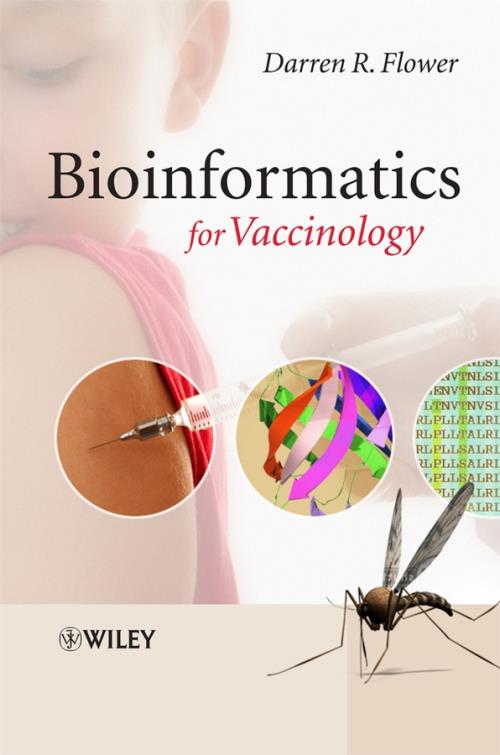
"... This book has several strong points. Although there are many textbooks that deal with vaccinology, few attempts have been made to bring together descriptions of vaccines in history, basic bioinformatics, various computational solutions and challenges in vaccinology, detailed experimental methodologies, and cutting-edge technologies... This book may well serve as a first line of reference for all biologists and computer scientists..." –Virology Journal, 2009
Vaccines have probably saved more lives and reduced suffering in a greater number of people than any other medical intervention in human history, succeeding in eradicating smallpox and significantly reducing the mortality and incidence of other diseases. However, with the emergence of diseases such as SARS and the threat of biological warfare, vaccination has once again become a topic of major interest in public health.
Vaccinology now has at its disposal an array of post-genomic approaches of great power. None has a more persuasive potential impact than the application of computational informatics to vaccine discovery; the recent expansion in genome data and the parallel increase in cheap computing power have placed the bioinformatics exploration of pathogen genomes centre stage for vaccine researchers.
This is the first book to address the area of bioinformatics as applied to rational vaccine design, discussing the ways in which bioinformatics can contribute to improved vaccine development by
- introducing the subject of harnessing the mathematical and computing power inherent in bioinformatics to the study of vaccinology
- putting it into a historical and societal context, and
- exploring the scope of its methods and applications.
Bioinformatics for Vaccinology is a one-stop introduction to computational vaccinology. It will be of particular interest to bioinformaticians with an interest in immunology, as well as to immunologists, and other biologists who need to understand how advances in theoretical and computational immunobiology can transform their working practices.
Table of Contents
CONTENTSPreface
Acknowledgements
Exordium: Vaccines: a Very, Very Short Introduction
1 Vaccines: Their Place in History
Smallpox in History
Variolation
Variolation in History
Variolation Comes to Britain
Lady Mary Wortley Montagu
Variolation and the Sublime Porte
The Royal Experiment
The Boston Connection
Variolation Takes Hold
The Suttonian Method
Variolation in Europe
The Coming of Vaccination
Edward Jenner
Cowpox
Vaccination Vindicated
Louis Pasteur
Vaccination Becomes a Science
Meister, Pasteur, and Rabies
A Vaccine for Every Disease
In the Time of Cholera
Haffkine and Cholera
Bubonic Plague
The Changing Face of Disease
Almroth Wright and Typhoid
Tuberculosis, Koch, and Calmette
Vaccine BCG
Poliomyelitis
Salk and Sabin
Diptheria
Whooping Cough
Many Diseases, Many Vaccines
Smallpox: Endgame
Further Reading
2 Vaccines: Need and Opportunity
Eradication and Reservoirs
The Ongoing Burden of Disease
Lifespans
The Evolving Nature of Disease
Economics, Climate, and Disease
Three Threats
Tuberculosis in the 21st Century
HIV and AIDS
Malaria: Then and Now
Influenza
Bioterrorism
Vaccines as Medicines
Vaccines and the Pharmaceutical Industry
Making Vaccines
The Coming of the Vaccine Industry
3 Vaccines: How They Work
Challenging the Immune System
The Threat from Bacteria: Robust, Diverse, and Endemic
MiCrobes, Diversity, and Metagenomics
The Intrinsic Complexity of the Bacterial Threat
Microbes and Humankind
The Nature of Vaccines
Types of Vaccine
Carbohydrate Vaccines
Epitopic Vaccines
Adjuvants and Vaccine Delivery
Emerging Immunovaccinology
The Immune System
Innate Immunity
Adaptive Immunity
The Microbiome and Mucosal Immunity
Cellular Components of Immunity
Cellular Immunity
The T Cell Repertoire
Epitopes: The Immunological Quantum
The Major Histocompatility Complex
MHC Nomenclature
Peptide Binding by the MHC
The Structure of the MHC
Antigen Presentation
The Proteasome
Transporter Associated with Antigen Processing
Class II Processing
Seek Simplicity and Then Distrust It
Cross Presentation
T Cell Receptor
T Cell Activation
Immunological Synapse
Signal 1, Signal 2, Immunodominance
Humoral Immunity
Further Reading
4 Vaccines: Data and Databases
Making Sense of Data
Knowledge in a Box
The Science of -Omes and -Omics
The Proteome
Systems Biology
The Immunome
Databases and Databanks
The Relational Database
The XML Database
The Protein Universe
Much Data, Many Databases
What Proteins Do
What Proteins Are
The Amino Acid World
The Chiral Nature of Amino Acids
Naming the Amino Acids
The Amino Acid Alphabet
Defining Amino Acid Properties
Size, Charge, and Hydrogen Bonding
Hydrophobicity, Lipophilicity, and Partitioning
Understanding Partitioning
Charges, Ionization, and pKa
Many Kinds of Property
Mapping the World of Sequences
Biological Sequence Databases
Nucleic Acid Sequence Databases
Protein Sequence Databases
Annotating Databases
Text Mining
Ontologies
Secondary Sequence Databases
Other Databases
Databases in Immunology
Host Databases
Pathogen Databases
Functional Immunological Databases
Composite, Integrated Databases
Allergen Databases
Further Reading
Reference
5 Vaccines: Data Driven Prediction of Binders, Epitopes and Immunogenicity
Towards Epitope-Based Vaccines
T Cell Epitope Prediction
Predicting MHC Binding
Binding is Biology
Quantifying Binding
Entropy, Enthalpy, and Entropy-Enthalpy Compensation
Experimental Measurement of Binding
Modern Measurement Methods
Isothermal Titration Calorimetry
Long and Short of Peptide Binding
The Class I Peptide Repertoire
Practicalities of Binding Prediction
Binding Becomes Recognition
Immunoinformatics Lends a Hand
Motif Based Prediction
The Imperfect Motif
Other Approaches to Binding Prediction
Representing Sequences
Computer Science Lends a Hand
Artificial Neural Networks
Hidden Markov Model
Support Vector Machines
Robust Multivariate Statistics
Partial Least Squares
Quantitative Structure Activity Relationships
Other Techniques and Sequence Representations
Amino Acid Properties
Direct Epitope Prediction
Predicting Antigen Presentation
Predicting Class II MHC Binding
Assessing Prediction Accuracy
Roc Plots
Quantitative Accuracy
Prediction Assessment Protocols
Comparing Predictions
Prediction Versus Experiment
Predicting B Cell Epitopes
Peak Profiles and Smoothing
Early Methods
Imperfect B Cell Prediction
References
6 Vaccines: Structural Approaches
Structure and Function
Structure and Function
Types of Protein Structure
Protein Folding
Ramachandran Plots
Local Structures
Protein Families, Protein Folds
Comparing Structures
Experimental Structure Determination
Structural Genomics
Protein Structure Databases
Other Databases
Immunological Structural Databases
Small Molecule Databases
Protein Homology Modelling
Using Homology Modelling Predicting MHC Supertypes Application to Alloreactivity
3D-QSAR
Protein Docking
Predicting B Cell Epitopes with Docking
Virtual Screening
Limitations to Virtual Screening
Predicting Epitopes with Virtual Screening
Virtual Screening and Adjuvant Discovery
Adjuvants and Innate Immunity
Small Molecule Adjuvants
Molecular Dynamics and Immunology
Molecular Dynamics Methodology
Molecular Dynamics and Binding
Immunological Applications
Limitations of Molecular Dynamics
Molecular Dynamics and High Performance Computing
References
7 Vaccines: Computational Solutions
Vaccines and the World
Bioinformatics and the Challenge for Vaccinology
Predicting Immunogenicity
Computational Vaccinology
The Threat Remains
Beyond Empirical Vaccinology
Designing New Vaccines
The Perfect Vaccine
Conventional Approaches
Genome Sequences
Size of a Genome
Reverse Vaccinology
Finding Antigens
The Success of Reverse Vaccinology
Tumour Vaccines
Prediction and Personalised Medicine
Imperfect Data
Forecasting and the Future of Computational Vaccinology
Index
Executive Summary
Vaccines have probably saved more lives and reduced suffering in a greater number of people than any other medical intervention in human history, succeeding in eradicating smallpox and significantly reducing the mortality and incidence of other diseases. However, with the emergence of diseases such as SARS and the threat of biological warfare, vaccination has once again become a topic of major interest in public health.Vaccinology now has at its disposal an array of post-genomic approaches of great power. None has a more persuasive potential impact than the application of computational informatics to vaccine discovery; the recent expansion in genome data and the parallel increase in cheap computing power have placed the bioinformatics exploration of pathogen genomes centre stage for vaccine researchers.
This is the first book to address the area of bioinformatics as applied to rational vaccine design, discussing the ways in which bioinformatics can contribute to improved vaccine development by
- introducing the subject of harnessing the mathematical and computing power inherent in bioinformatics to the study of vaccinology
- putting it into a historical and societal context, and
- exploring the scope of its methods and applications.
Bioinformatics for Vaccinology is a one-stop introduction to computational vaccinology. It will be of particular interest to bioinformaticians with an interest in immunology, as well as to immunologists, and other biologists who need to understand how advances in theoretical and computational immunobiology can transform their working practices.


