


The GCC juice market is projected to grow at a CAGR of 7.02% during the forecast period.
Across Middle Eastern countries, the demand for juices and nectars has doubled over the past couple of years, primarily for premium juice products. Consumption is rising, driven by the affluent Gulf States, mainly Saudi Arabia and the United Arab Emirates. Higher demand for value-added products, such as juices containing vegetables, seeds, and other ingredients, has been witnessed in recent years. Fruit juice is expected to account for a significant share of the market studied. Brands' novel offerings, growing consumer awareness toward juice consumption, and increasing disposable income are some major factors driving the GCC juice market.
Moreover, drinking beverages with added artificial sweeteners can increase the risk of obesity and other health problems such as type 2 diabetes, cardiovascular disease, and others. This is propelling the demand for natural beverages, such as fruit juices that do not contain added preservatives. According to the Organic Trade Association, due to the high prevalence of obesity in some GCC nations, such as the United Arab Emirates, where 40% of the population were obese as of 2022, consumers in the GCC region are becoming more health concerned. To encourage people to make healthier choices, most countries in the region have imposed a tax on sugar-sweetened beverages and concentrates. These factors are propelling the free-from, organic juice market across the GCC market.
This product will be delivered within 2 business days.
Across Middle Eastern countries, the demand for juices and nectars has doubled over the past couple of years, primarily for premium juice products. Consumption is rising, driven by the affluent Gulf States, mainly Saudi Arabia and the United Arab Emirates. Higher demand for value-added products, such as juices containing vegetables, seeds, and other ingredients, has been witnessed in recent years. Fruit juice is expected to account for a significant share of the market studied. Brands' novel offerings, growing consumer awareness toward juice consumption, and increasing disposable income are some major factors driving the GCC juice market.
Moreover, drinking beverages with added artificial sweeteners can increase the risk of obesity and other health problems such as type 2 diabetes, cardiovascular disease, and others. This is propelling the demand for natural beverages, such as fruit juices that do not contain added preservatives. According to the Organic Trade Association, due to the high prevalence of obesity in some GCC nations, such as the United Arab Emirates, where 40% of the population were obese as of 2022, consumers in the GCC region are becoming more health concerned. To encourage people to make healthier choices, most countries in the region have imposed a tax on sugar-sweetened beverages and concentrates. These factors are propelling the free-from, organic juice market across the GCC market.
GCC Juice Market Trends
The Changing Pattern of Beverage Consumption among Saudi Consumers
In Saudi Arabia, alcoholic beverages and advertising of energy drinks have been outlawed. Also, a partial ban on energy drink sales from certain facilities has been imposed. These factors are leading the soft drinks market to flourish in the country. The market's growth is further propelled by a hot climate and a large youth market attracted to western lifestyle products. The Saudi market has a significant number of characteristics for international investors that are of particular interest. In most markets, the alcoholic drink sector poses stiff competition to the soft drink sector, but alcohol is prohibited in Saudi Arabia, providing an advantage for the soft drink market. Furthermore, the regularity of rehydration due to the hot climate is one of the significant factors that has contributed to the growth of the beverage market in Saudi Arabia. At the expense of carbonated drinks, higher-value drinks such as 100% premium juice, followed by vitamin water and functional drinks, are expected to be the main growth drivers over the coming years.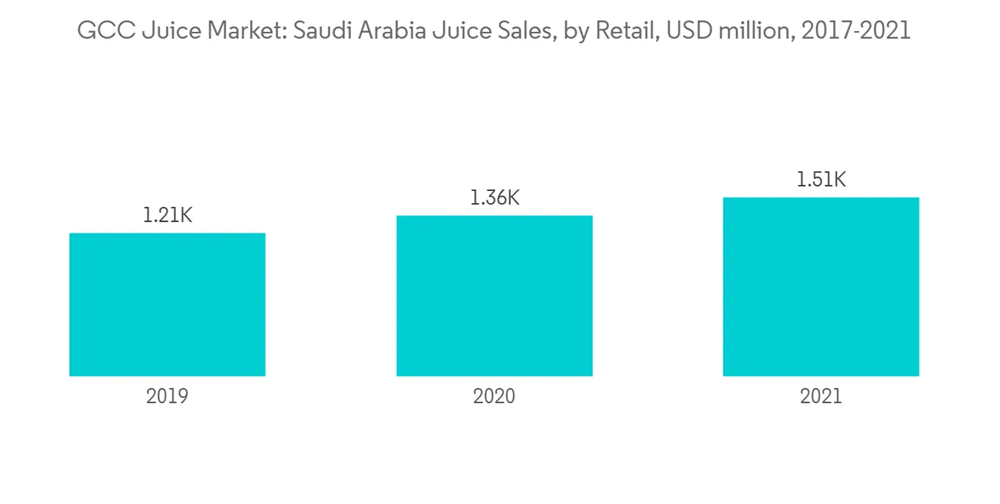
Sales Through Supermarkets and Hypermarkets is Anticipated to Grow Significantly
The GCC Retail Industry is experiencing unprecedented change. More price-conscious customers are entering the market due to a growing share of immigration patterns and an active connection with media across all platforms. Furthermore, consumers are demanding personalization, value, experience, and convenience. Several large-scale malls and shopping centers with a destined section solely for supermarkets are currently under development in the GCC. The government and private players are investing in developing infrastructure to complement the growing population, a rising tourism sector, and increasing GDP per capita. The sales of juices through the retail e-commerce market in the GCC are expected to expand due to the increasing penetration of smartphones and social media platforms. Moreover, better access to secure payment gateways, along with gradual improvement in logistics capabilities, is increasing penetration levels resulting in the growth of the industry.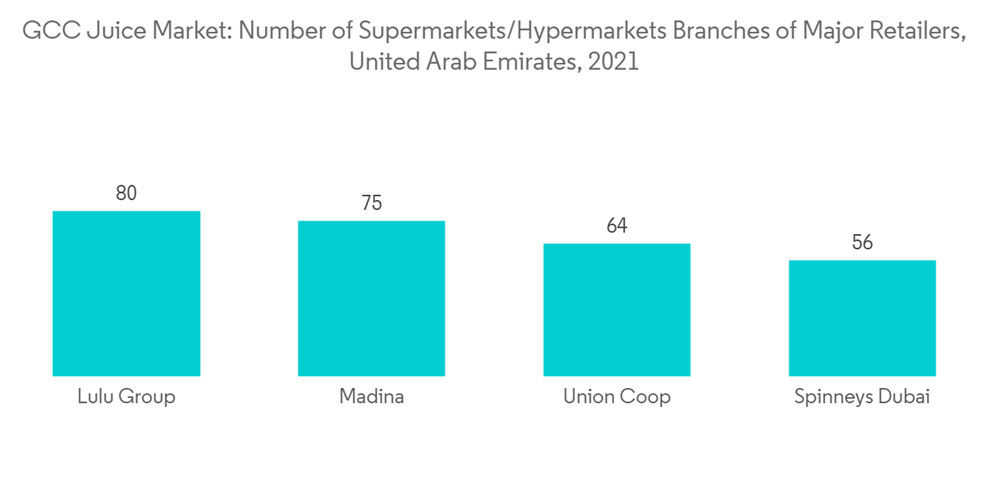
GCC Juice Market Competitor Analysis
The GCC juice market is highly fragmented, with numerous local and global players operating across the country. Thus, to sustain their positions in the market, the active players are rolling out new offerings to cater to consumers’ increasing demand for mixed juice beverages. Key players are now focussing on expanding capacity to increase production and reach more consumers. On the other hand, mergers and acquisitions of local brands have been prominent, which enables them to share technical expertise and existing product portfolio. Some major players in the GCC juice market include the Almarai Company, the Coca-Cola Company, the Berry Company, Del Monte Foods Holdings Limited, and Al Rabie Saudi Foods Co.Additional benefits of purchasing the report:
- The market estimate (ME) sheet in Excel format
- 3 months of analyst support
This product will be delivered within 2 business days.
Table of Contents
1 INTRODUCTION
4 MARKET DYNAMICS
5 MARKET SEGMENTATION
6 COMPETITIVE LANDSCAPE
Companies Mentioned (Partial List)
A selection of companies mentioned in this report includes, but is not limited to:
- Almrai Company
- Del Monte Foods Inc.
- The Coco Cola Company
- Pepsico Inc.
- The Berry Company
- Al Rabie Saudi Foods Co.
- Robinsons
- Go: Organic
- Union Beverages Company
- Binghatti Holdings


