



The Orthopedic Devices Market size is estimated at USD 46.18 billion in 2024, and is expected to reach USD 57.79 billion by 2029, growing at a CAGR of 4.59% during the forecast period (2024-2029).
The COVID-19 pandemic had a significant impact on the orthopedic devices market. An article published in BMJ Case Reports in February 2021 reported that the first wave of the COVID-19 pandemic in the United States led to the postponement or cancelation of elective and non-urgent surgeries to conserve healthcare resources. The article also reported that orthopedic surgeries in the region decreased by 68.4% during the first wave of the pandemic, which impacted the growth of the studied market. Thus, the studied market initially witnessed significant challenges due to the cancellation of orthopedic surgeries caused by government regularization. However, with the decrease in COVID-19 cases and the resumption of orthopedic surgical procedures, the studied market is expected to witness significant growth over the forecast period.
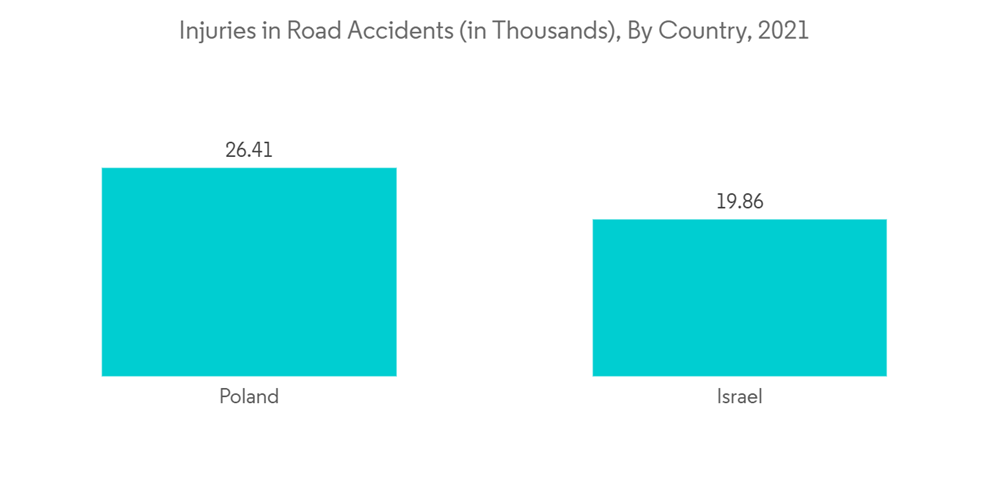
The factors driving the growth of the studied market are the increasing number of joint reconstruction surgeries, the growing burden of orthopedic disorders, trauma, and accident cases, and the development of bioabsorbable and titanium implants. For instance, the OECD database reported that 2,794.5 per million people got injured in road accidents in Iceland, followed by 1,230 per million people in Ireland and 2,867.9 per million in Japan in 2021. A high number of road injuries may lead to an increase in bone damage cases, which will increase the demand for orthopedic devices, thereby driving the growth of the studied market.
Also, a high incidence of joint surgeries is reported among the geriatric population. The geriatric population has weaker bones, so they are more prone to accidents and other bone deformities. The United Nations Projections 2022 report stated that in 2022, there were 771 million people aged 65 years or over globally, and the number is projected to reach 994 million by 2030 and 1.6 billion by 2050. Similarly, an article published in the journal JARS, published in July 2021 reported that aging weakens the bone-tendon junction and decreases the ultimate tensile strength, leading to an increased risk of joint damage. Thus, the increasing cases of joint damage conditions coupled with increasing aging are leading to an increasing number of orthopedic surgeries, thereby driving the growth of the studied market.
Also, the rise in musculoskeletal diagnoses and osteoporosis-related fractures is boosting the demand for orthopedic implants among the elderly. For instance, in December 2021, Work-Related Musculoskeletal Disorders Statistics in Great Britain Report stated that the total number of cases of work-related musculoskeletal disorders in 2020/21 was 470,000, with a prevalence rate of 1,420 per 100,000 workers. These comprised 212,000 cases where the upper limbs or neck were affected, 182,000 where the back was affected, and 76,000 where the lower limbs were affected. The report also stated that this number increased significantly compared to the previous years. Thus, the rise in cases of musculoskeletal disorders is leading to growing orthopedic surgeries, driving the growth of the studied market.
Furthermore, technological developments and new product launches are also benefitting the market. For instance, in February 2022, 4WEB Medical launched a comprehensive array of hyperlordotic lateral implants. The implants combined with 4WEB's Lumbar Spine Plating Solution allow for more cost-effective treatment options and reduce the need for more extensive, invasive posterior corrective procedures. Thus, such new product launches are leading the development of better orthopedic devices, thereby driving the growth of the studied market.
Thus, due to the increasing number of significant joint reconstruction surgeries, the growing burden of orthopedic disorders, trauma, and accident cases, and the development of bioabsorbable and titanium implants, the studied market is expected to witness significant growth over the forecast period. However, stringent regulatory scenarios and poor reimbursement scenarios, and a lack of skilled surgeons may hamper the development of the market.
The article published in the Journal of Korean Medicine in January 2023 mentioned that the global incidence of traumatic spinal fractures was 10.5 per 100,000 persons, with an estimated 768,473 new cases of spinal injury annually worldwide for the year 2021. Also, an article published in Vertebral Compression Fractures, updated in August 2023, mentioned that in younger patients, about 50% of spine fractures were due to motor vehicle collisions, with another 25% being due to falls. The report also mentioned that the annual incidence of vertebral compression fracture was 10.7 per 1000 women and 5.7 per 1,000 men globally. Such a high number of spinal injuries and conditions in both usages of spinal orthopedic devices boosted the segment growth.
The growing number of product approvals and launches are expected to increase the awareness of spine orthopedic devices and boost sales of the same. For instance, in January 2023, SynerFuse, Inc., announced the positive results of the study conducted to evaluate the safety and tolerability of simultaneous implant of spinal fusion and neuromodulation devices in chronic lower back pain patients. Such positive clinical studies improve the adoption of these spinal implants in the future boosting segment growth. Moreover, in October 2023, Spine Wave and eCential Robotics, entered into a long-term partnership to develop, market, and commercialize combined optimized solutions and enhance robotic spine surgery.
Thus, the increasing incidence of spinal injury and spinal conditions needing implant surgery, along with the growing product portfolio with advanced features is expected to boost the segment growth over the forecast period.
The high incidence of orthopedic surgeries in North American countries is also driving the growth of the studied market. According to the Canadian Institute for Health Information 2023, 117,078 hip and knee replacements were performed nationwide in 2021-2022. 58,635 hip surgeries and 58,443 knee replacements were performed in 2021–2022. Such high cases of joint surgical procedures and fractures are increasing the demand for orthopedic devices, thereby driving the growth of the studied market in the region.
The increasing prevalence of orthopedic disorders in Mexico is another significant factor driving the demand for orthopedic devices. For instance, in November 2022, the American College of Rheumatology reported a rising prevalence of rheumatoid arthritis (RA) in Mexico. Furthermore, market players are focusing on developing novel orthopedic devices to satisfy users' needs. Moreover, in February 2022, Spire Orthopedic Partners entered into partnerships with Middlesex Orthopedic Surgeons, PC (MOS), and Orthopaedic Surgical Associates (OSA). Such partnerships will lead to better orthopedic and spine care services to the patients in the region, thereby driving the growth of the studied market in the region.
Similarly, in October 2023, Ortho Development, a United States-based orthopedic device manufacturer, launched its BKS Uni Partial Knee System in the United States market. This system was an addition to the company’s balanced knee implant systems portfolio. Such innovations to improve the efficiency of surgical procedures are expected to boost the market studied in the region.
Thus, the high number of orthopedic disorders, increasing joint surgical procedures, and rising technological developments are driving the growth of the studied market in the region.
This product will be delivered within 2 business days.
The COVID-19 pandemic had a significant impact on the orthopedic devices market. An article published in BMJ Case Reports in February 2021 reported that the first wave of the COVID-19 pandemic in the United States led to the postponement or cancelation of elective and non-urgent surgeries to conserve healthcare resources. The article also reported that orthopedic surgeries in the region decreased by 68.4% during the first wave of the pandemic, which impacted the growth of the studied market. Thus, the studied market initially witnessed significant challenges due to the cancellation of orthopedic surgeries caused by government regularization. However, with the decrease in COVID-19 cases and the resumption of orthopedic surgical procedures, the studied market is expected to witness significant growth over the forecast period.
The factors driving the growth of the studied market are the increasing number of joint reconstruction surgeries, the growing burden of orthopedic disorders, trauma, and accident cases, and the development of bioabsorbable and titanium implants. For instance, the OECD database reported that 2,794.5 per million people got injured in road accidents in Iceland, followed by 1,230 per million people in Ireland and 2,867.9 per million in Japan in 2021. A high number of road injuries may lead to an increase in bone damage cases, which will increase the demand for orthopedic devices, thereby driving the growth of the studied market.
Also, a high incidence of joint surgeries is reported among the geriatric population. The geriatric population has weaker bones, so they are more prone to accidents and other bone deformities. The United Nations Projections 2022 report stated that in 2022, there were 771 million people aged 65 years or over globally, and the number is projected to reach 994 million by 2030 and 1.6 billion by 2050. Similarly, an article published in the journal JARS, published in July 2021 reported that aging weakens the bone-tendon junction and decreases the ultimate tensile strength, leading to an increased risk of joint damage. Thus, the increasing cases of joint damage conditions coupled with increasing aging are leading to an increasing number of orthopedic surgeries, thereby driving the growth of the studied market.
Also, the rise in musculoskeletal diagnoses and osteoporosis-related fractures is boosting the demand for orthopedic implants among the elderly. For instance, in December 2021, Work-Related Musculoskeletal Disorders Statistics in Great Britain Report stated that the total number of cases of work-related musculoskeletal disorders in 2020/21 was 470,000, with a prevalence rate of 1,420 per 100,000 workers. These comprised 212,000 cases where the upper limbs or neck were affected, 182,000 where the back was affected, and 76,000 where the lower limbs were affected. The report also stated that this number increased significantly compared to the previous years. Thus, the rise in cases of musculoskeletal disorders is leading to growing orthopedic surgeries, driving the growth of the studied market.
Furthermore, technological developments and new product launches are also benefitting the market. For instance, in February 2022, 4WEB Medical launched a comprehensive array of hyperlordotic lateral implants. The implants combined with 4WEB's Lumbar Spine Plating Solution allow for more cost-effective treatment options and reduce the need for more extensive, invasive posterior corrective procedures. Thus, such new product launches are leading the development of better orthopedic devices, thereby driving the growth of the studied market.
Thus, due to the increasing number of significant joint reconstruction surgeries, the growing burden of orthopedic disorders, trauma, and accident cases, and the development of bioabsorbable and titanium implants, the studied market is expected to witness significant growth over the forecast period. However, stringent regulatory scenarios and poor reimbursement scenarios, and a lack of skilled surgeons may hamper the development of the market.
Orthopedic Devices Market Trends
Spine Orthopedic Devices Segment Holds the Largest Share in the Market
Spinal orthopedic devices are medical devices used to stabilize and support the spine in individuals with spinal conditions or injuries. They can be made from various materials, such as metals, polymers, or a combination of both. The market growth factors include the rising prevalence of spinal degenerative diseases and Scoliosis. The spinal orthopedic devices have been experiencing steady growth over the years due to factors such as the increasing prevalence of spinal disorders, advancements in surgical techniques, and a growing elderly population. The segment encompasses various types of spinal implants, including spinal fusion devices, vertebral compression fracture treatment devices, non-fusion devices, and spinal biologics.The article published in the Journal of Korean Medicine in January 2023 mentioned that the global incidence of traumatic spinal fractures was 10.5 per 100,000 persons, with an estimated 768,473 new cases of spinal injury annually worldwide for the year 2021. Also, an article published in Vertebral Compression Fractures, updated in August 2023, mentioned that in younger patients, about 50% of spine fractures were due to motor vehicle collisions, with another 25% being due to falls. The report also mentioned that the annual incidence of vertebral compression fracture was 10.7 per 1000 women and 5.7 per 1,000 men globally. Such a high number of spinal injuries and conditions in both usages of spinal orthopedic devices boosted the segment growth.
The growing number of product approvals and launches are expected to increase the awareness of spine orthopedic devices and boost sales of the same. For instance, in January 2023, SynerFuse, Inc., announced the positive results of the study conducted to evaluate the safety and tolerability of simultaneous implant of spinal fusion and neuromodulation devices in chronic lower back pain patients. Such positive clinical studies improve the adoption of these spinal implants in the future boosting segment growth. Moreover, in October 2023, Spine Wave and eCential Robotics, entered into a long-term partnership to develop, market, and commercialize combined optimized solutions and enhance robotic spine surgery.
Thus, the increasing incidence of spinal injury and spinal conditions needing implant surgery, along with the growing product portfolio with advanced features is expected to boost the segment growth over the forecast period.
North America Expected to Witness Significant Growth
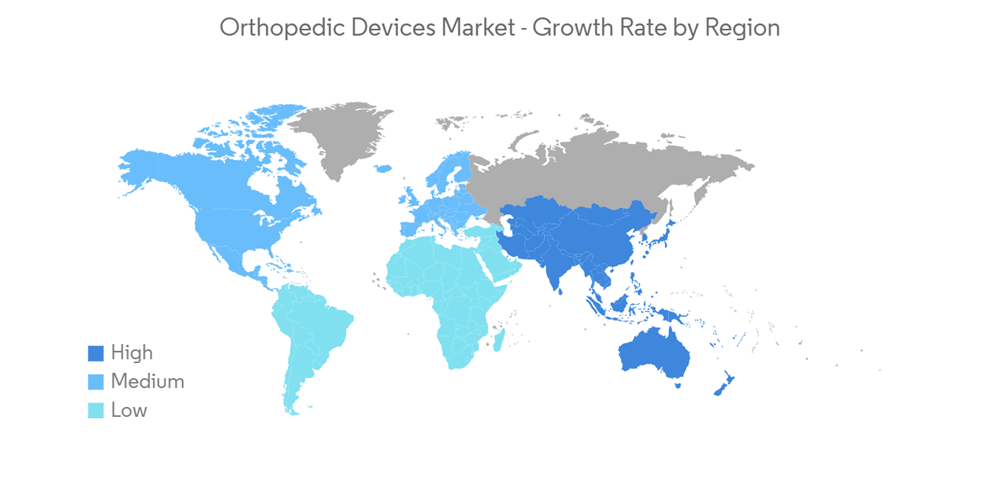
North America is expected to witness significant growth over the forecast period due to the direct presence of key regional players, a strong distribution network, and a well-established healthcare infrastructure. Recent trends in the North American orthopedic devices market include using new polymer materials and the development of prosthetic devices as per the functional needs of patients.The high incidence of orthopedic surgeries in North American countries is also driving the growth of the studied market. According to the Canadian Institute for Health Information 2023, 117,078 hip and knee replacements were performed nationwide in 2021-2022. 58,635 hip surgeries and 58,443 knee replacements were performed in 2021–2022. Such high cases of joint surgical procedures and fractures are increasing the demand for orthopedic devices, thereby driving the growth of the studied market in the region.
The increasing prevalence of orthopedic disorders in Mexico is another significant factor driving the demand for orthopedic devices. For instance, in November 2022, the American College of Rheumatology reported a rising prevalence of rheumatoid arthritis (RA) in Mexico. Furthermore, market players are focusing on developing novel orthopedic devices to satisfy users' needs. Moreover, in February 2022, Spire Orthopedic Partners entered into partnerships with Middlesex Orthopedic Surgeons, PC (MOS), and Orthopaedic Surgical Associates (OSA). Such partnerships will lead to better orthopedic and spine care services to the patients in the region, thereby driving the growth of the studied market in the region.
Similarly, in October 2023, Ortho Development, a United States-based orthopedic device manufacturer, launched its BKS Uni Partial Knee System in the United States market. This system was an addition to the company’s balanced knee implant systems portfolio. Such innovations to improve the efficiency of surgical procedures are expected to boost the market studied in the region.
Thus, the high number of orthopedic disorders, increasing joint surgical procedures, and rising technological developments are driving the growth of the studied market in the region.
Orthopedic Devices Industry Overview
The orthopedic devices market is highly fragmented and competitive. Market players focus on continuous product development and offer orthopedic devices at competitive prices, especially in developing countries. Some of the companies currently dominating the market are B. Braun SE, Enovis Corporation, Arthrex, Inc., ATEC Spine Inc., Zimmer Biomet, Medtronic PLC, Smith & Nephew PLC, Stryker Corporation, Boston Scientific Corporation, Johnson & Johnson Inc., and others.Additional Benefits:
- The market estimate (ME) sheet in Excel format
- 3 months of analyst support
This product will be delivered within 2 business days.
Table of Contents
1 INTRODUCTION
4 MARKET DYNAMICS
5 MARKET SEGMENTATION (Market Size by Value - USD Million)
6 COMPETITIVE LANDSCAPE
Companies Mentioned (Partial List)
A selection of companies mentioned in this report includes, but is not limited to:
- B. Braun SE
- Enovis Corporation
- Arthrex, Inc.
- ATEC Spine Inc.
- NuVasive, Inc.
- Boston Scientific Corporation
- CTL Amedica
- Globus Medical
- Johnson & Johnson, Inc.
- Medtronic PLC
- Ossur
- Smith & Nephew PLC
- Stryker Corporation
- Zimmer Biomet


