



The Global Laboratory Information System Market size is estimated at USD 3.49 billion in 2024, and is expected to reach USD 6.36 billion by 2029, growing at a CAGR of 12.79% during the forecast period (2024-2029).
Covid 19 has had a huge impact on the laboratory information system market due to the surge in Covid 19 cases daily. According to the study published in the Journal of the American Medical Informatics Association in August 2020, the Belgium national reference testing center has carried out more than 25,000 covid PCR tests in parallel to standard routine testing since the start of the outbreak by the implementation of laboratory information systems. Companies have also launched laboratory informatics, especially for the Covid 19 testing. For instance, The COVID-19 LIMS from LabVantage is a powerful, adaptable, and easy-to-use system that can be swiftly adapted to fulfill the rising demand for diagnostic testing in PHLs, as well as the adaptability to handle workflows for other types of testing. Therefore, handling the large volume of testing samples by LIMS during the covid, avoiding manual errors, and simplifying the process, covid selective innovative products have resulted in the surge of laboratory informatics demand during the pandemic.
The laboratory information system (LIS) is driven by the rising demand for lab automation and advancement in the R&D labs, especially in the pharmaceutical and biotechnological laboratories. Additionally, the high accuracy and efficiency results of laboratory informatics products are driving the growth of the laboratory informatics market. According to the survey conducted in 2020 by Astrix Technologies LLC, a professional healthcare IT service provider, 61% of Laboratory Information Management System (LIMS) users profited from the removal of manual operations, 57% improved their sample management approach, and 46% saw a substantial increase in productivity within their laboratory setting.
According to the same source, a present LIMS implementation in their laboratory was reported by 77 percent of the organization's survey. The bulk of the organizations had more than 25 users, and 30% of the companies had at least 3 to 5 distinct types of LIMS across their implementation. Over 36% of customers said they were extremely happy with their LIMS, and 44% said it improved laboratory efficiency significantly. This represents the improved performance of laboratory informatics across the healthcare industry, thereby propelling the market growth.
Technological advancements have enabled healthcare providers and scientists to prepare samples and carry out a diagnosis with more precision and accuracy and minimize errors with these laboratory informatics and have therefore fuelled the market growth. For Instance, in March 2021, LabVantage Solutions, Inc., one of the leading providers of laboratory informatics solutions and services including purpose-built LIMS solutions that allow labs to go live faster and at a lower total cost, launched LabVantage Analytics. It is a full-featured, self-service advanced analytics solution that lets users easily explore, analyze, and visualize LIMS, enterprise, and external data to gain actionable business insights. Such advancements are expected to propel the growth of the market.
Thus, owing to the abovementioned factors, the market is expected to show growth over the forecast period. However, the high cost of LIMS software is a factor that may hinder the growth of the market.
The cloud-based solution is a comparatively newer approach and is mostly used by organizations that lack the internal infrastructure to support them. The installation cost for these systems is lower than the on-premise systems. Moreover, this software eradicates the need for in-house maintenance and minimizes the risk of data theft by providing a secure platform for information sharing, which is likely to be the prime factor driving their increasing demand.
Many of the companies are continuously engaged in the market studied by adopting new strategies such as product development, partnership, etc., which are expected to drive the market studied in this segment. For instance, in October 2020, GoMeyra, an innovative new software company dedicated to providing revolutionary tech solutions for medical laboratories, launched a customizable cloud-based lab information management system, GoMeyra LIMS. This software was specifically designed and developed as a solution to alleviate bottlenecks and increase efficiency challenges inherent in laboratory workflows.
Additionally, in September 2021, Health Minister Robin Swann launched a GBP 40 million Laboratory Information Management System (LIMS) that will significantly improve the delivery of clinical diagnostic services for key areas of healthcare. In March 2021, LabVantage Solutions, Inc. launched LabVantage Analytics, a full-featured, self-service advanced analytics solution that lets users easily explore, analyze, and visualize LIMS, enterprise, and external data to gain actionable business insights.
Furthermore, reduced IT manpower, cost-effective data management, and easy deployability are also some of the factors for the growth of the segment. Thus, owing to the abovementioned factors, the market segment is expected to drive the growth of the market.
The United States has dominated the laboratory informatics market in North America due to increased acceptance of digital healthcare in the nation and rising investments of companies developing laboratory informatics software in the country. For instance, Abbott headquartered in the United States has invested USD 2,420 million in R&D for FY 2020. Many key players that manufacture laboratory informatics software, such as Orchard Software Corporation, Cerner, Epic Systems, Roper Technologies, and Comp Pro Med Inc. are headquartered in the United States, and will, in turn, help to grow the market in the United States.
Additionally, the implementation of new services in the country is expected to drive market growth. For instance, in March 2020, LigoLab Information System reported that the company is providing fully integrated and automated LIS support for client laboratories in California, Washington, and New York that are using Food and Drug Administration-approved instruments to perform high-volume COVID-19 tests. Additionally, in August 2021, Xybion Corporation, a global low-code SaaS company that enables digital transformation in highly regulated industries including Life Sciences released the Pristima XD Digital Pathology.
Thus, this is expected to augment the growth of the market studied over the forecast period.
This product will be delivered within 2 business days.
Covid 19 has had a huge impact on the laboratory information system market due to the surge in Covid 19 cases daily. According to the study published in the Journal of the American Medical Informatics Association in August 2020, the Belgium national reference testing center has carried out more than 25,000 covid PCR tests in parallel to standard routine testing since the start of the outbreak by the implementation of laboratory information systems. Companies have also launched laboratory informatics, especially for the Covid 19 testing. For instance, The COVID-19 LIMS from LabVantage is a powerful, adaptable, and easy-to-use system that can be swiftly adapted to fulfill the rising demand for diagnostic testing in PHLs, as well as the adaptability to handle workflows for other types of testing. Therefore, handling the large volume of testing samples by LIMS during the covid, avoiding manual errors, and simplifying the process, covid selective innovative products have resulted in the surge of laboratory informatics demand during the pandemic.
The laboratory information system (LIS) is driven by the rising demand for lab automation and advancement in the R&D labs, especially in the pharmaceutical and biotechnological laboratories. Additionally, the high accuracy and efficiency results of laboratory informatics products are driving the growth of the laboratory informatics market. According to the survey conducted in 2020 by Astrix Technologies LLC, a professional healthcare IT service provider, 61% of Laboratory Information Management System (LIMS) users profited from the removal of manual operations, 57% improved their sample management approach, and 46% saw a substantial increase in productivity within their laboratory setting.
According to the same source, a present LIMS implementation in their laboratory was reported by 77 percent of the organization's survey. The bulk of the organizations had more than 25 users, and 30% of the companies had at least 3 to 5 distinct types of LIMS across their implementation. Over 36% of customers said they were extremely happy with their LIMS, and 44% said it improved laboratory efficiency significantly. This represents the improved performance of laboratory informatics across the healthcare industry, thereby propelling the market growth.
Technological advancements have enabled healthcare providers and scientists to prepare samples and carry out a diagnosis with more precision and accuracy and minimize errors with these laboratory informatics and have therefore fuelled the market growth. For Instance, in March 2021, LabVantage Solutions, Inc., one of the leading providers of laboratory informatics solutions and services including purpose-built LIMS solutions that allow labs to go live faster and at a lower total cost, launched LabVantage Analytics. It is a full-featured, self-service advanced analytics solution that lets users easily explore, analyze, and visualize LIMS, enterprise, and external data to gain actionable business insights. Such advancements are expected to propel the growth of the market.
Thus, owing to the abovementioned factors, the market is expected to show growth over the forecast period. However, the high cost of LIMS software is a factor that may hinder the growth of the market.
Laboratory Information System (LIS) Market Trends
Cloud-based Segment is Expected to Hold a Major Market Share in the Laboratory Information System Market
The cloud-based segment will dominate in the LIS market, as with the cloud-based setup, data can be accessed by multiple locations and multiple systems, and from multiple branches. Thus, all these factors are augmenting the growth of cloud-based mode of delivery.The cloud-based solution is a comparatively newer approach and is mostly used by organizations that lack the internal infrastructure to support them. The installation cost for these systems is lower than the on-premise systems. Moreover, this software eradicates the need for in-house maintenance and minimizes the risk of data theft by providing a secure platform for information sharing, which is likely to be the prime factor driving their increasing demand.
Many of the companies are continuously engaged in the market studied by adopting new strategies such as product development, partnership, etc., which are expected to drive the market studied in this segment. For instance, in October 2020, GoMeyra, an innovative new software company dedicated to providing revolutionary tech solutions for medical laboratories, launched a customizable cloud-based lab information management system, GoMeyra LIMS. This software was specifically designed and developed as a solution to alleviate bottlenecks and increase efficiency challenges inherent in laboratory workflows.
Additionally, in September 2021, Health Minister Robin Swann launched a GBP 40 million Laboratory Information Management System (LIMS) that will significantly improve the delivery of clinical diagnostic services for key areas of healthcare. In March 2021, LabVantage Solutions, Inc. launched LabVantage Analytics, a full-featured, self-service advanced analytics solution that lets users easily explore, analyze, and visualize LIMS, enterprise, and external data to gain actionable business insights.
Furthermore, reduced IT manpower, cost-effective data management, and easy deployability are also some of the factors for the growth of the segment. Thus, owing to the abovementioned factors, the market segment is expected to drive the growth of the market.

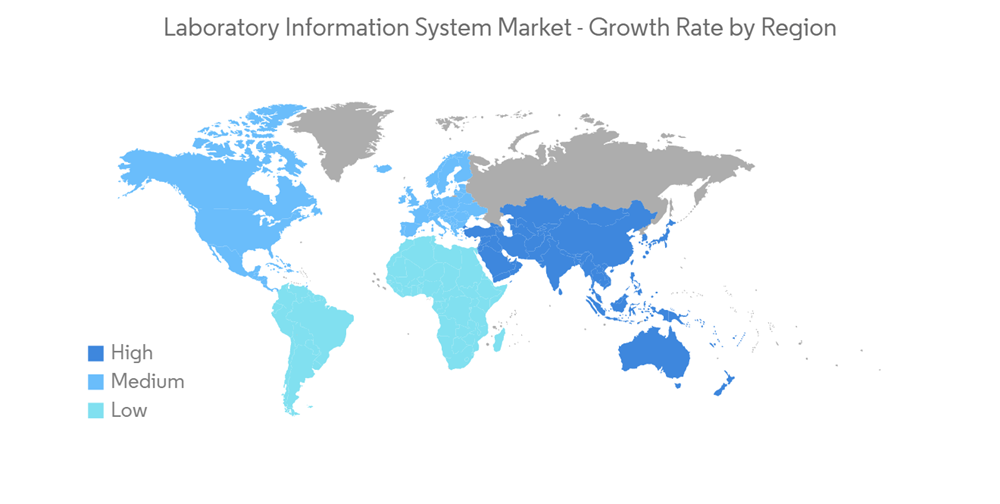
North America is Expected to Hold a Significant Share in the Market and Expected to do Same in the Forecast Period
North America is expected to hold a major market share in the laboratory information system market due to the well-established healthcare IT sector in the region and government efforts to make access to laboratory services easy. It also dominates the laboratory informatics industry, and it is likely to remain so for a few more years.The United States has dominated the laboratory informatics market in North America due to increased acceptance of digital healthcare in the nation and rising investments of companies developing laboratory informatics software in the country. For instance, Abbott headquartered in the United States has invested USD 2,420 million in R&D for FY 2020. Many key players that manufacture laboratory informatics software, such as Orchard Software Corporation, Cerner, Epic Systems, Roper Technologies, and Comp Pro Med Inc. are headquartered in the United States, and will, in turn, help to grow the market in the United States.
Additionally, the implementation of new services in the country is expected to drive market growth. For instance, in March 2020, LigoLab Information System reported that the company is providing fully integrated and automated LIS support for client laboratories in California, Washington, and New York that are using Food and Drug Administration-approved instruments to perform high-volume COVID-19 tests. Additionally, in August 2021, Xybion Corporation, a global low-code SaaS company that enables digital transformation in highly regulated industries including Life Sciences released the Pristima XD Digital Pathology.
Thus, this is expected to augment the growth of the market studied over the forecast period.
Laboratory Information System (LIS) Industry Overview
The laboratory information system market competition is set to intensify, as several key players are focusing on the expansion of their laboratory information system portfolio through acquisition and collaboration with other companies. The laboratory information system market is expected to open up several opportunities for new players, as well as currently established market leaders. Some of the companies which are currently dominating the market are Sysmex Corporation, Total Specific Solutions (TSS), Roper Technologies, XIFIN Inc., Orchard Software Corporation, Cerner Corporation, Comp Pro Med Inc., Epic Systems Corporation, Margy Tech, and Cirdan Ltd.Additional Benefits:
- The market estimate (ME) sheet in Excel format
- 3 months of analyst support
This product will be delivered within 2 business days.
Table of Contents
1 INTRODUCTION
4 MARKET DYNAMICS
5 MARKET SEGMENTATION (Market Size by Value - USD Million)
6 COMPETITIVE LANDSCAPE
Companies Mentioned (Partial List)
A selection of companies mentioned in this report includes, but is not limited to:
- Sysmex Corporation
- Total Specific Solutions (TSS)
- Roper Technologies (Sunquest Information Systems, Inc)
- XIFIN Inc
- Orchard Software Corporation
- Cerner Corporation
- Comp Pro Med Inc
- Epic Systems Corporation
- Margy Tech
- Cirdan Ltd
- CliniSys Group Limited
- Biosero, Inc.


