



Asia-Pacific Tourism Vehicle Rental Market is valued at USD 29.87 billion in the current year and is anticipated to grow to USD 48.40 billion by the next five years, registering a CAGR of 8.5% in terms of revenue during the forecast period.
Over the medium term, tourism is rapidly growing while experiencing deepening diversification and becoming one of the fastest-growing economic sectors in the region. Modern tourism is closely linked to development and encompasses a growing number of new destinations. These dynamics turned tourism into a key driver for socio-economic progress. As tourism is a huge market, the demand for vehicle rentals is growing around the region.
Technology is an important factor that is expected to boost the market over the forecast period. The increased use of information technology is transforming the industry and allowing operators to provide better services to their customers. It includes the use of optimized customer information management, as well as the creation of user-friendly internet booking applications.
Tourism Car rental companies are developing strategic partnerships with corporates, airlines, insurance companies, and universities to reduce the percentage of single-occupancy vehicles while touring. Global car rental company Sixt SE is a trusted last-mile rental partner for many Asian Airlines such as China Airlines, Thai Airways, etc.
Increased concern and awareness of lower emissions primarily led to an increase in car rental options. Additionally, vehicle rental also provides the option of increased mobility without the concern of paying the costs associated with car ownership. These services are offered via websites and through other online platforms, which helped the growth of the tourism vehicle rental market.
The Ministry of Tourism and Creative Economy of a major country is investing in the country's tourism industry to foster sustainable and community-based tourism. Five super-priority tourism destinations, eight special economic zones, and 12 sustainable tourism projects are expected to benefit from the investments. It will increase demand for car rental services during the forecast period. For instance,
The Ministry of Tourism and Creative Economy of Indonesia is investing in several country's tourism industries to foster sustainable and community-based tourism. Five super-priority tourism destinations, eight special economic zones, and 12 sustainable tourism projects are expected to benefit from the investments, which will increase demand for car rental services in the coming years.
Moreover, investment and tourist traction increased the overall vehicle rental demand in the region as most tourists are seen renting vehicles to visit the nearby tourist sites. It is likely to enhance the demand for rental services in the coming years.
Renting a vehicle via mobile applications is the second most common type of online booking. Mobile applications must be downloaded and can be accessed easily by the car renter to change the booking details, among other services. For instance, in 2022, around 76% of the total regional population included a smartphone in the region. It, in turn, is likely to witness major growth for the online vehicle rental booking service.
With the advancement of technology, renting a car through online booking is the most popular option for customers in recent years. Furthermore, it offers extra features for real-time monitoring of a rental vehicle's operation, performance, and maintenance. Such features include significant benefits for drivers and fleet managers, allowing them to spot dangers and execute timely modifications to their rental services more efficiently and effectively.
Most renters prefer renting vehicles online during peak seasons. As the vehicle rental market experiences an increase in demand during peak holiday seasons, people tend to book vehicles in advance. Only a handful of cars are booked through rental stores, mostly during the off-season. Online booking services include booking vehicles via internet sites and mobile applications, among which booking-via-sites is the most common method opted for by renters.
With the development mentioned above across the region, the demand for online vehicle rental services is witnessing major growth during the forecast period.
This product will be delivered within 2 business days.
Over the medium term, tourism is rapidly growing while experiencing deepening diversification and becoming one of the fastest-growing economic sectors in the region. Modern tourism is closely linked to development and encompasses a growing number of new destinations. These dynamics turned tourism into a key driver for socio-economic progress. As tourism is a huge market, the demand for vehicle rentals is growing around the region.
Technology is an important factor that is expected to boost the market over the forecast period. The increased use of information technology is transforming the industry and allowing operators to provide better services to their customers. It includes the use of optimized customer information management, as well as the creation of user-friendly internet booking applications.
Tourism Car rental companies are developing strategic partnerships with corporates, airlines, insurance companies, and universities to reduce the percentage of single-occupancy vehicles while touring. Global car rental company Sixt SE is a trusted last-mile rental partner for many Asian Airlines such as China Airlines, Thai Airways, etc.
Increased concern and awareness of lower emissions primarily led to an increase in car rental options. Additionally, vehicle rental also provides the option of increased mobility without the concern of paying the costs associated with car ownership. These services are offered via websites and through other online platforms, which helped the growth of the tourism vehicle rental market.
Asia Pacific Tourism Vehicle Rental Market Trends
Rise in Tourism Sector and Leisure Travelling
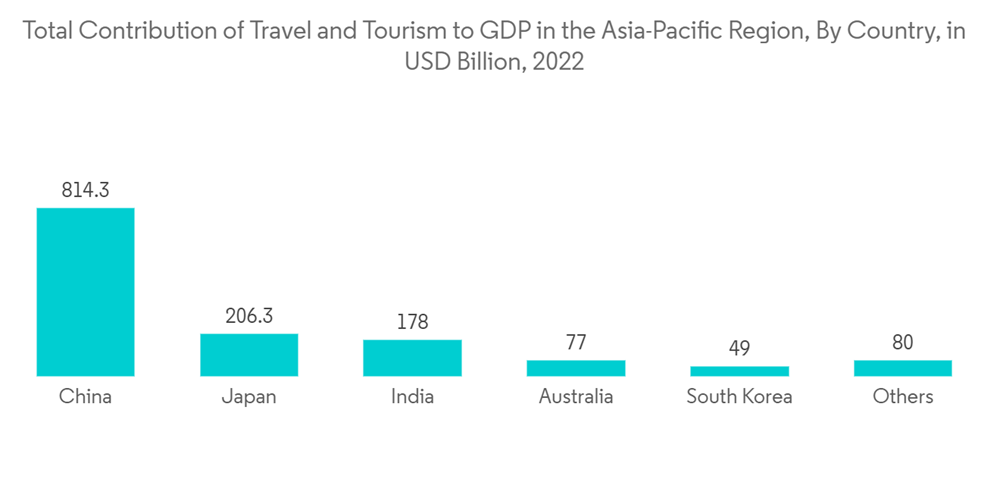
The tourism sector contributes a significant share of the vehicle rental service market owing to the rise in international tourist visitors across the region. It, in turn, is likely to witness major growth for the market during the forecast period.The Ministry of Tourism and Creative Economy of a major country is investing in the country's tourism industry to foster sustainable and community-based tourism. Five super-priority tourism destinations, eight special economic zones, and 12 sustainable tourism projects are expected to benefit from the investments. It will increase demand for car rental services during the forecast period. For instance,
- In March 2022, Minister of Tourism and Creative Economy Sandiaga Uno met with 18 foreign investors to offer sustainable tourism projects worth USD 1.5 billion. This investment is around 20% of the growth of the national tourism industry, which will be a 5% contribution to national economic growth from the tourism industry in 2022.
- In August 2021, the Indonesia Investment Coordinating Agency (BKPM) and the Ministry of Tourism and Creative Economy signed an MoU for the investment in the Tourism and Creative Economy Sector. The MoU also stated the development of infrastructure across the country will attract tourists, which, in turn, increase the number of visitors across the country.
The Ministry of Tourism and Creative Economy of Indonesia is investing in several country's tourism industries to foster sustainable and community-based tourism. Five super-priority tourism destinations, eight special economic zones, and 12 sustainable tourism projects are expected to benefit from the investments, which will increase demand for car rental services in the coming years.
Moreover, investment and tourist traction increased the overall vehicle rental demand in the region as most tourists are seen renting vehicles to visit the nearby tourist sites. It is likely to enhance the demand for rental services in the coming years.
Online Booking Expected to Witness Significant Growth during the Forecast Period
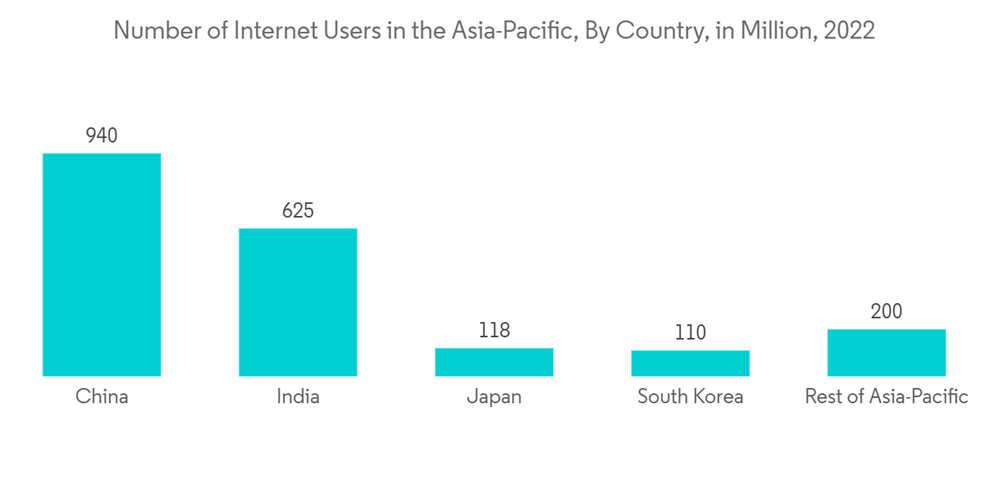
Increased concern and awareness about the containment of the virus primarily led to an increase in vehicle rental options. Additionally, the tourism vehicle rental market also provides the option of increased mobility without the concern of paying the costs associated with vehicle ownership. These services are offered via websites and through other online platforms, attributing to the growth of the market.Renting a vehicle via mobile applications is the second most common type of online booking. Mobile applications must be downloaded and can be accessed easily by the car renter to change the booking details, among other services. For instance, in 2022, around 76% of the total regional population included a smartphone in the region. It, in turn, is likely to witness major growth for the online vehicle rental booking service.
With the advancement of technology, renting a car through online booking is the most popular option for customers in recent years. Furthermore, it offers extra features for real-time monitoring of a rental vehicle's operation, performance, and maintenance. Such features include significant benefits for drivers and fleet managers, allowing them to spot dangers and execute timely modifications to their rental services more efficiently and effectively.
Most renters prefer renting vehicles online during peak seasons. As the vehicle rental market experiences an increase in demand during peak holiday seasons, people tend to book vehicles in advance. Only a handful of cars are booked through rental stores, mostly during the off-season. Online booking services include booking vehicles via internet sites and mobile applications, among which booking-via-sites is the most common method opted for by renters.
With the development mentioned above across the region, the demand for online vehicle rental services is witnessing major growth during the forecast period.
Asia Pacific Tourism Vehicle Rental Industry Overview
The Asia-Pacific Tourism Vehicle Rental Market is dominated by several key players such as Zoomcar, Drivezy, Sixt SE, Shouqi Car Rental, etc. The companies are expanding their fleet size and launching new services across the region. It is anticipated to witness major growth during the forecast period. For instance:- In June 2022, CARRO, which is Southeast Asia's largest used automobile marketplace, collaborated with PT Mitra Pinasthika Mustika Tbk, which is Indonesia's leading consumer automotive and transportation company. Both companies agreed on the collaboration of a deal worth USD 54 million under which CARRO became the 50% shareholder of PT Mitra Pinasthika Mustika Rent's business. Furthermore, this agreement kicks off a strategic partnership between MPMX, which is also Indonesia's leading automotive and transportation company. CARRO will provide consumers in Indonesia with an end-to-end ecosystem that includes an online marketplace, financing, repair, rental, and aftersales services.
- In June 2022, MPMX and CARRO signed a strategic partnership that will provide Indonesia with a fully integrated online and offline automotive ecosystem.
Additional Benefits:
- The market estimate (ME) sheet in Excel format
- 3 months of analyst support
This product will be delivered within 2 business days.
Table of Contents
1 INTRODUCTION
4 MARKET DYNAMICS
5 MARKET SEGMENTATION (Market Size in Value (USD))
6 COMPETITIVE LANDSCAPE
Companies Mentioned (Partial List)
A selection of companies mentioned in this report includes, but is not limited to:
- eHi Car Service Limited
- Beijing China Auto Rental Co. Ltd.
- The Hertz Corporation
- Zoomcar India Private Limited
- Carzonrent India Private Limited
- Drivezy India Travels Private Limited
- Uber Technologies
- Shouqi Car Rental
- Shenzhen Top One Car Rental Co. ltd.


