



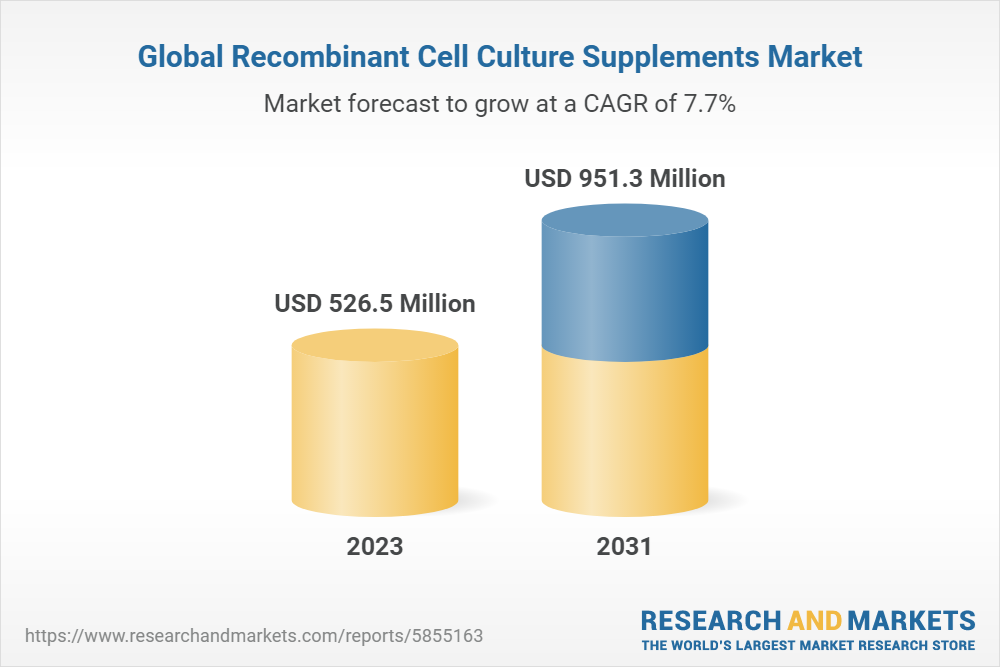
The recombinant cell culture supplements market was valued at USD 567.56 Million in 2025 . It is poised to grow at a CAGR of 7.70% during the forecast period of 2026-2035, and reach USD 1.19 billion by 2035 . The market growth is driven by the rising biopharmaceutical production and demand for consistent, serum-free culture systems supporting monoclonal antibodies and vaccine manufacturing. The increasing adoption of recombinant proteins enhances reproducibility and safety in cell-based processes.
Key Market Trends and Insights
Recombinant cell culture supplements play a crucial role in modern bioprocessing workflows, supporting enhanced cell growth, productivity, and consistency across biopharmaceutical production and research applications, especially in advanced therapeutic development and manufacturing systems optimization efficiency. The market was valued at USD 567.56 Million in 2025 with continued innovation and expansion across global biopharmaceutical manufacturing ecosystems worldwide. It is witnessing steady expansion driven by increasing biopharmaceutical research and development, rising demand for high-quality biologics, and growing adoption of serum-free and chemically defined media components across industrial and academic settings.
Recombinant Cell Culture Supplements Market Segmentation
Market Breakup by Product Type
Market Breakup by Application
Market Breakup by Expression System
Market Breakup by End User
Market Breakup by Region
Recombinant Cell Culture Supplements Market Growth Analysis and Key Influencers
Recombinant Cell Culture Supplements Market Dynamics
The following section outlines the key factors influencing market growth, including major drivers, restraints, and emerging opportunities.
Recombinant Cell Culture Supplements Market Growth Drivers
Rising Adoption of Animal-Free Recombinant Proteins to Accelerate the Market Expansion
The increasing demand for animal-free and scalable recombinant proteins is significantly driving the market. For example, in February 2026, Dyadic Applied BioSolutions and Proliant Health & Biologicals announced the commercial launch of AlbuFree™ DX, a recombinant human albumin designed for cell culture and life science applications. This development reflects the rising shift toward consistent, contamination-free, and ethically produced cell culture ingredients in biopharmaceutical manufacturing. Recombinant albumin is gaining strong adoption due to its role in improving cell growth efficiency and ensuring supply stability. Such advancements are strengthening biologics production capabilities and supporting expanding demand across research and industrial biotechnology applications worldwide.
Recombinant Cell Culture Supplements Market Restraints
High Production Costs and Manufacturing Complexity Limit Market Development
The market is constrained by high production costs and complex manufacturing processes associated with maintaining purity, scalability, and batch-to-batch consistency of recombinant proteins. These challenges increase overall development timelines and limit affordability for smaller research laboratories and emerging biotechnology firms. Recombinant protein production requires stringent purification and quality control steps, which can significantly elevate operational expenses and restrict widespread adoption.
Recombinant Cell Culture Supplements Market Opportunities
Advancements in Cell Culture Feed Supplements to Drive Productivity and Boost the Market Value
Advancements in fed-batch and cell culture supplementation technologies are enhancing productivity and process efficiency in biopharmaceutical manufacturing. For example, in April 2026, BioEngine Sci-tech Co., Ltd. launched UltraFeed, a fed-batch supplement that enhances CHO cell productivity, achieving up to 48% higher titers and improved viability in monoclonal antibody and recombinant protein production. This innovation is expected to strengthen scalable biologics manufacturing and support recombinant protein production efficiency.
Recombinant Cell Culture Supplements Market Trends
The market is witnessing several trends including xeno-free media adoption, regulatory compliance, and bioprocess innovation.
Increasing Adoption of Xeno-Free Serum Solutions is Likely to Enhance Market Growth
The shift toward xeno-free and regulatory-compliant serum alternatives is strengthening recombinant cell culture supplement development for cell and gene therapy applications. For example, in February 2024, GeminiBio launched a human AB serum product designed for cell therapy and regenerative medicine manufacturing workflows, improving consistency and compliance. These developments are expected to enhance scalability and accelerate market growth in advanced bioprocessing systems.
Recombinant Cell Culture Supplements Market Share
Recombinant Albumin Segment Set to Lead Amid Rising Animal-Free Bioprocessing Demand
The market is segmented by product type into recombinant albumin, recombinant insulin, recombinant transferrin, recombinant cytokines, and others, with recombinant albumin expected to lead due to increasing adoption of animal-free biopharmaceutical manufacturing. The growth is driven by the rising demand for safe, consistent cell culture ingredients and expansion in biologics, cell and gene therapies. For example, in November 2025, Evonik and InVitria partnered to expand supply of animal component-free recombinant human serum albumin for biopharma applications, supporting improved process efficiency and stability. Such development reinforces strong outlook for albumin segment growth.
Recombinant Cell Culture Supplements Market Analysis by Region
The regions included in the report are North America, Europe, Asia-Pacific, Latin America, and the Middle East & Africa. Among these, North America is expected to lead the market during the forecast period. The region benefits from a well-established biopharmaceutical industry, widespread adoption of advanced cell culture technologies, and substantial investments in biologics, vaccine development, and regenerative medicine. Strong research infrastructure and increasing demand for high-quality recombinant supplements in bioprocessing applications further support market expansion. The continuous advancements in cell-based manufacturing and the growing focus on serum-free and chemically defined culture systems are expected to strengthen the region’s market position and drive sustained growth.
Leading Players in the Recombinant Cell Culture Supplements Market
Corning Incorporated
Corning Incorporated is a leading provider of cell culture solutions, supporting biopharmaceutical research and manufacturing through its extensive portfolio of cell culture media, serum-free media, recombinant supplements, and fetal bovine serum products. The company’s media solutions are designed to optimize cell growth, expansion, and viability across multiple stages of cell culture. By offering high-quality raw materials, custom media formulations, and reliable supply capabilities, Corning plays an important role in advancing cell-based research, bioprocessing, and therapeutic development.
BBI Solutions OEM Limited
BBI Solutions OEM Limited supports the recombinant cell culture supplements sector through its expertise in gene synthesis, protein production, and molecular biology solutions. The company utilizes proprietary enzymes, reagents, and advanced synthesis technologies to develop custom genetic materials and recombinant products used in biotechnology research and production workflows. Its capabilities in gene engineering and protein expression contribute to the development of recombinant supplements that enhance cell culture performance, making BBI Solutions a valuable participant in the life sciences and biomanufacturing ecosystem.
FUJIFILM Irvine Scientific, Inc.
FUJIFILM Irvine Scientific is a key player in the market, in June 2025, the company announced its rebranding as FUJIFILM Biosciences, reinforcing its position as a comprehensive life sciences supplier. The company offers a broad portfolio of cell culture media, recombinant growth factors, proteins, and cell culture supplements that support research, cell and gene therapy, vaccine development, and biopharmaceutical manufacturing. With more than five decades of expertise in cell culture technologies, the company remains a significant contributor to innovation and quality within the recombinant cell culture supplements industry.
Gemini Bioproducts, LLC
Gemini Bioproducts, LLC provides a diverse range of cell culture supplements and reagents designed to improve cell proliferation, productivity, and reproducibility. Its portfolio includes human recombinant insulin, human serum albumin, amino acids, and specialized cell culture supplements used in research, biopharmaceutical production, cell therapy, and gene therapy applications. Through its focus on high-quality media components and cGMP manufacturing capabilities, Gemini Bioproducts supports the growing demand for advanced cell culture solutions and contributes to the expansion of biologics and regenerative medicine development.
Other key players in the market are Abcam plc., HiMedia Laboratories, LLC, Kingfisher Biotech, Inc., Lonza Group AG, Merck KGaA, Novus Biologicals, LLC, Thermo Fisher Scientific Inc., and InVitria.
Key Questions Answered in the Recombinant Cell Culture Supplements Market Report
This report is developed through a comprehensive mixed-methods research approach combining:
Key Market Trends and Insights
- By product type, recombinant albumin segment accounted for around 31% in the historical period.
- By application, bio-production segment led the market with nearly 60% in the historical period.
- By end user, the biotechnology and pharmaceutical companies segment held approximately 38% in the forecast period.
- Market Size (2025): USD 567.56 Million
- Projected Market Size (2035): USD 1.19 billion
- CAGR (2026-2035): 7.70%
- Largest Market in 2025: North America
Recombinant cell culture supplements play a crucial role in modern bioprocessing workflows, supporting enhanced cell growth, productivity, and consistency across biopharmaceutical production and research applications, especially in advanced therapeutic development and manufacturing systems optimization efficiency. The market was valued at USD 567.56 Million in 2025 with continued innovation and expansion across global biopharmaceutical manufacturing ecosystems worldwide. It is witnessing steady expansion driven by increasing biopharmaceutical research and development, rising demand for high-quality biologics, and growing adoption of serum-free and chemically defined media components across industrial and academic settings.
Recombinant Cell Culture Supplements Market Segmentation
Market Breakup by Product Type
- Recombinant Albumin (rAlbumin)
- Recombinant Insulin (rInsulin)
- Recombinant Transferrin (rTransferrin)
- Recombinant Cytokines
- Others
Market Breakup by Application
- Regenerative Medicine
- Stem Cell Therapies
- Cell Therapies
- Gene Therapies
- Bio-Production
- Monoclonal Antibodies
- Recombinant Proteins
- Hormones
- Vaccines
- Other Biological Products
Market Breakup by Expression System
- Mammalian Expression System
- E. coli Expression System
- Yeast Expression System
- Others
Market Breakup by End User
- Academic and Research Institutions
- Biotechnology and Pharmaceutical Companies
- Others
Market Breakup by Region
- North America
- Europe
- Asia-Pacific
- Latin America
- Middle East and Africa
Recombinant Cell Culture Supplements Market Growth Analysis and Key Influencers
Recombinant Cell Culture Supplements Market Dynamics
The following section outlines the key factors influencing market growth, including major drivers, restraints, and emerging opportunities.
Recombinant Cell Culture Supplements Market Growth Drivers
Rising Adoption of Animal-Free Recombinant Proteins to Accelerate the Market Expansion
The increasing demand for animal-free and scalable recombinant proteins is significantly driving the market. For example, in February 2026, Dyadic Applied BioSolutions and Proliant Health & Biologicals announced the commercial launch of AlbuFree™ DX, a recombinant human albumin designed for cell culture and life science applications. This development reflects the rising shift toward consistent, contamination-free, and ethically produced cell culture ingredients in biopharmaceutical manufacturing. Recombinant albumin is gaining strong adoption due to its role in improving cell growth efficiency and ensuring supply stability. Such advancements are strengthening biologics production capabilities and supporting expanding demand across research and industrial biotechnology applications worldwide.
Recombinant Cell Culture Supplements Market Restraints
High Production Costs and Manufacturing Complexity Limit Market Development
The market is constrained by high production costs and complex manufacturing processes associated with maintaining purity, scalability, and batch-to-batch consistency of recombinant proteins. These challenges increase overall development timelines and limit affordability for smaller research laboratories and emerging biotechnology firms. Recombinant protein production requires stringent purification and quality control steps, which can significantly elevate operational expenses and restrict widespread adoption.
Recombinant Cell Culture Supplements Market Opportunities
Advancements in Cell Culture Feed Supplements to Drive Productivity and Boost the Market Value
Advancements in fed-batch and cell culture supplementation technologies are enhancing productivity and process efficiency in biopharmaceutical manufacturing. For example, in April 2026, BioEngine Sci-tech Co., Ltd. launched UltraFeed, a fed-batch supplement that enhances CHO cell productivity, achieving up to 48% higher titers and improved viability in monoclonal antibody and recombinant protein production. This innovation is expected to strengthen scalable biologics manufacturing and support recombinant protein production efficiency.
Recombinant Cell Culture Supplements Market Trends
The market is witnessing several trends including xeno-free media adoption, regulatory compliance, and bioprocess innovation.
Increasing Adoption of Xeno-Free Serum Solutions is Likely to Enhance Market Growth
The shift toward xeno-free and regulatory-compliant serum alternatives is strengthening recombinant cell culture supplement development for cell and gene therapy applications. For example, in February 2024, GeminiBio launched a human AB serum product designed for cell therapy and regenerative medicine manufacturing workflows, improving consistency and compliance. These developments are expected to enhance scalability and accelerate market growth in advanced bioprocessing systems.
Recombinant Cell Culture Supplements Market Share
Recombinant Albumin Segment Set to Lead Amid Rising Animal-Free Bioprocessing Demand
The market is segmented by product type into recombinant albumin, recombinant insulin, recombinant transferrin, recombinant cytokines, and others, with recombinant albumin expected to lead due to increasing adoption of animal-free biopharmaceutical manufacturing. The growth is driven by the rising demand for safe, consistent cell culture ingredients and expansion in biologics, cell and gene therapies. For example, in November 2025, Evonik and InVitria partnered to expand supply of animal component-free recombinant human serum albumin for biopharma applications, supporting improved process efficiency and stability. Such development reinforces strong outlook for albumin segment growth.
Recombinant Cell Culture Supplements Market Analysis by Region
The regions included in the report are North America, Europe, Asia-Pacific, Latin America, and the Middle East & Africa. Among these, North America is expected to lead the market during the forecast period. The region benefits from a well-established biopharmaceutical industry, widespread adoption of advanced cell culture technologies, and substantial investments in biologics, vaccine development, and regenerative medicine. Strong research infrastructure and increasing demand for high-quality recombinant supplements in bioprocessing applications further support market expansion. The continuous advancements in cell-based manufacturing and the growing focus on serum-free and chemically defined culture systems are expected to strengthen the region’s market position and drive sustained growth.
Leading Players in the Recombinant Cell Culture Supplements Market
Corning Incorporated
Corning Incorporated is a leading provider of cell culture solutions, supporting biopharmaceutical research and manufacturing through its extensive portfolio of cell culture media, serum-free media, recombinant supplements, and fetal bovine serum products. The company’s media solutions are designed to optimize cell growth, expansion, and viability across multiple stages of cell culture. By offering high-quality raw materials, custom media formulations, and reliable supply capabilities, Corning plays an important role in advancing cell-based research, bioprocessing, and therapeutic development.
BBI Solutions OEM Limited
BBI Solutions OEM Limited supports the recombinant cell culture supplements sector through its expertise in gene synthesis, protein production, and molecular biology solutions. The company utilizes proprietary enzymes, reagents, and advanced synthesis technologies to develop custom genetic materials and recombinant products used in biotechnology research and production workflows. Its capabilities in gene engineering and protein expression contribute to the development of recombinant supplements that enhance cell culture performance, making BBI Solutions a valuable participant in the life sciences and biomanufacturing ecosystem.
FUJIFILM Irvine Scientific, Inc.
FUJIFILM Irvine Scientific is a key player in the market, in June 2025, the company announced its rebranding as FUJIFILM Biosciences, reinforcing its position as a comprehensive life sciences supplier. The company offers a broad portfolio of cell culture media, recombinant growth factors, proteins, and cell culture supplements that support research, cell and gene therapy, vaccine development, and biopharmaceutical manufacturing. With more than five decades of expertise in cell culture technologies, the company remains a significant contributor to innovation and quality within the recombinant cell culture supplements industry.
Gemini Bioproducts, LLC
Gemini Bioproducts, LLC provides a diverse range of cell culture supplements and reagents designed to improve cell proliferation, productivity, and reproducibility. Its portfolio includes human recombinant insulin, human serum albumin, amino acids, and specialized cell culture supplements used in research, biopharmaceutical production, cell therapy, and gene therapy applications. Through its focus on high-quality media components and cGMP manufacturing capabilities, Gemini Bioproducts supports the growing demand for advanced cell culture solutions and contributes to the expansion of biologics and regenerative medicine development.
Other key players in the market are Abcam plc., HiMedia Laboratories, LLC, Kingfisher Biotech, Inc., Lonza Group AG, Merck KGaA, Novus Biologicals, LLC, Thermo Fisher Scientific Inc., and InVitria.
Key Questions Answered in the Recombinant Cell Culture Supplements Market Report
- What was the recombinant cell culture supplements market value in 2025?
- What is the recombinant cell culture supplements market forecast outlook for 2026-2035?
- What major factors aid the demand for the recombinant cell culture supplements market?
- How has the market performed so far, and how is it anticipated to perform in the coming years?
- What are the market's major drivers, opportunities, and restraints?
- What are the major recombinant cell culture supplements market trends?
- Which product type is expected to dominate the market segment?
- Which application is projected to lead the market segment?
- Which expression system is anticipated to drive the market segment?
- Which end user is likely to dominate the market segment?
- Who are the key players in the recombinant cell culture supplements market?
- What are the current unmet needs and challenges in the market?
- How are partnerships, collaborations, mergers, and acquisitions among the key market players shaping the market dynamics?
This report is developed through a comprehensive mixed-methods research approach combining:
- Primary Research: In-depth interviews conducted with 30+ stakeholders across the biopharmaceutical and life sciences ecosystem, including cell culture scientists, bioprocess development managers, biologics manufacturing experts, procurement specialists, and key opinion leaders from biotechnology companies, research institutions, and contract development and manufacturing organizations (CDMOs).
- Secondary Research: Analysis of company publications and announcements from Corning Incorporated, FUJIFILM Irvine Scientific, Lonza Group AG, Thermo Fisher Scientific Inc., Merck KGaA, and other industry participants; peer-reviewed literature on recombinant proteins and cell culture technologies; patent databases; regulatory and quality guidance documents; investment and partnership announcements; and bioprocessing industry reports covering serum-free media, recombinant supplements, cell therapy, gene therapy, vaccine production, and biologics manufacturing.
- Validation: All market estimates, segment shares, growth forecasts, and competitive assessments are validated through triangulation using top-down and bottom-up modeling approaches, cross-referenced with industry developments, expert consultations, and multiple independent data sources to ensure accuracy and consistency.
Table of Contents
1 Preface
3 Global Recombinant Cell Culture Supplements Market Overview
4 Global Recombinant Cell Culture Supplements Market Landscape
5 Global Recombinant Cell Culture Supplements Market Dynamics
6 Global Recombinant Cell Culture Supplements Market Segmentation (219-2035)
7 North America Recombinant Cell Culture Supplements Market (219-2035)
8 Europe Recombinant Cell Culture Supplements Market (219-2035)
9 Asia Pacific Recombinant Cell Culture Supplements Market (219-2035)
10 Latin America Recombinant Cell Culture Supplements Market (219-2035)
11 Middle East and Africa Recombinant Cell Culture Supplements Market (219-2035)
12 Regulatory Framework
13 Patent Analysis
14 Funding and Investment Analysis
15 Strategic Initiatives
16 Supplier Landscape
17 Global Recombinant Cell Culture Supplements Market - Distribution Model (Additional Insight)
Companies Mentioned
- Corning Incorporated
- BBI Solutions OEM Limited
- FUJIFILM Irvine Scientific, Inc.
- Gemini Bioproducts, LLC
Table Information
| Report Attribute | Details |
|---|---|
| No. of Pages | 400 |
| Published | August 2026 |
| Forecast Period | 2026 - 2035 |
| Estimated Market Value ( USD | $ 567.56 Million |
| Forecasted Market Value ( USD | $ 1190 Million |
| Compound Annual Growth Rate | 7.7% |
| Regions Covered | Global |
| No. of Companies Mentioned | 4 |


