



The Europe Arcade Games Center Market size is projected to reach USD 5.72 Billion by 2031, growing at a CAGR of 10.1% during the forecast period (2026-2033).
Germany dominated the Europe Arcade Games Center Market in 2025 owing to strong recreational spending, advanced entertainment infrastructure, and increasing deployment of immersive gaming technologies. The UK and France markets are also witnessing strong growth driven by rising demand for experiential entertainment, esports integration, and family entertainment centers across the region.
The Europe Arcade Games Center market has evolved from traditional coin-operated entertainment venues into technologically advanced experiential gaming hubs. The market is witnessing increasing adoption of immersive gaming technologies including virtual reality (VR), augmented reality (AR), motion-sensing systems, and AI-enabled customer engagement platforms.
Arcade centers across Europe are increasingly positioned as social entertainment destinations that combine gaming with food, beverage, esports, and family-oriented recreational experiences. Rising urbanization, increasing consumer spending on experiential entertainment, and the growing popularity of social gaming are contributing to sustained market growth across the region.
The UK arcade games center market is experiencing strong growth supported by rising popularity of experiential entertainment, social gaming culture, and retro arcade concepts. Arcade centers in the country are increasingly integrating multiplayer gaming, immersive VR attractions, and digital loyalty systems to enhance consumer engagement. The expansion of family entertainment centers and adult-oriented arcade bars is further contributing to market growth. Increasing investments in esports tournaments and interactive gaming experiences are also supporting the market’s long-term development across the UK.
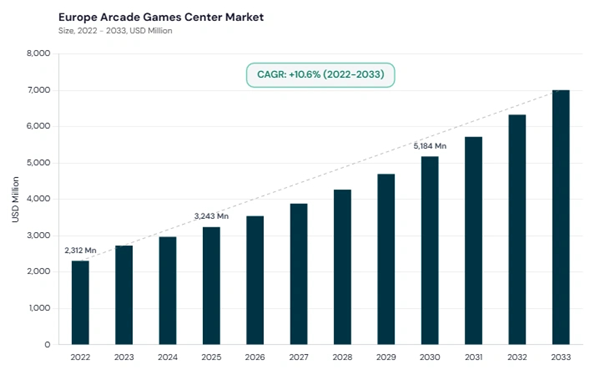
Germany dominated the Europe Arcade Games Center Market in 2025 owing to strong recreational spending, advanced entertainment infrastructure, and increasing deployment of immersive gaming technologies. The UK and France markets are also witnessing strong growth driven by rising demand for experiential entertainment, esports integration, and family entertainment centers across the region.
The Europe Arcade Games Center market has evolved from traditional coin-operated entertainment venues into technologically advanced experiential gaming hubs. The market is witnessing increasing adoption of immersive gaming technologies including virtual reality (VR), augmented reality (AR), motion-sensing systems, and AI-enabled customer engagement platforms.
Arcade centers across Europe are increasingly positioned as social entertainment destinations that combine gaming with food, beverage, esports, and family-oriented recreational experiences. Rising urbanization, increasing consumer spending on experiential entertainment, and the growing popularity of social gaming are contributing to sustained market growth across the region.
Type Outlook
Based on Type, the market is segmented into Video Games, Redemption Games, Electro-Mechanical Games, Simulation Games, Pinball & Retro Arcade Games, and Other Type. The Video Games segment dominated the Europe Arcade Games Center Market by Type in 2025 and is expected to continue to be a dominant segment till 2031; thereby, achieving a market value of USD 1.8 Billion by 2031. Additionally, the Redemption Games segment is expected to witness strong growth during the forecast period.Revenue Model Outlook
Based on Revenue Model, the market is segmented into Pay-per-Play, Time-Based Pricing, Subscription Based, and Other Revenue Model. The Pay-per-Play segment acquired the largest revenue share in the Europe Arcade Games Center Market in 2025 and is expected to continue to dominate till 2031; thereby, achieving a market value of USD 3.0 Billion by 2031. The dominance of this segment is attributed to the flexibility and accessibility associated with single-session gaming models, especially among casual gamers and tourists. Additionally, the Subscription Based segment is anticipated to witness substantial growth during the forecast period owing to increasing adoption of membership programs and loyalty-based gaming ecosystems.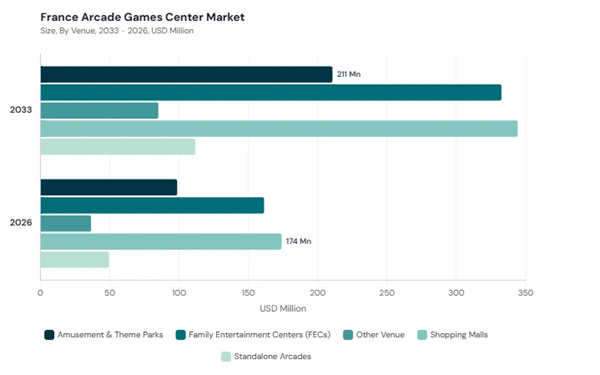
Venue Outlook
Based on Venue, the market is segmented into Shopping Malls, Family Entertainment Centers (FECs), Amusement & Theme Parks, Standalone Arcades, and Other Venue. The Shopping Malls segment dominated the Europe Arcade Games Center Market by Venue in 2025 and is expected to continue to maintain its dominance till 2031; thereby, achieving a market value of USD 1.8 Billion by 2031. Additionally, the Family Entertainment Centers (FECs) segment is expected to witness significant growth during the forecast period owing to increasing consumer preference for immersive and multi-activity entertainment experiences.Country Outlook
Germany represents one of the largest markets for arcade games centers in Europe owing to strong consumer spending on recreational activities and a well-established entertainment infrastructure. The country is witnessing increasing deployment of immersive VR gaming arenas, simulation-based gaming experiences, and family entertainment centers integrated with shopping malls. Operators are focusing on integrating AI-driven customer engagement systems, digital payment solutions, and esports-oriented arcade concepts to strengthen customer retention and operational efficiency.The UK arcade games center market is experiencing strong growth supported by rising popularity of experiential entertainment, social gaming culture, and retro arcade concepts. Arcade centers in the country are increasingly integrating multiplayer gaming, immersive VR attractions, and digital loyalty systems to enhance consumer engagement. The expansion of family entertainment centers and adult-oriented arcade bars is further contributing to market growth. Increasing investments in esports tournaments and interactive gaming experiences are also supporting the market’s long-term development across the UK.
List of Key Companies Profiled
- Bandai Namco Holdings Inc.
- SEGA Sammy Holdings Inc.
- Raw Thrills, Inc.
- Adrenaline Amusements Inc.
- LAI Games Pty Ltd.
- UNIS Technology Ltd.
- Andamiro Co., Ltd.
- Konami Group Corporation
- Taito Corporation (Square Enix Holdings Co., Ltd.)
- Dave & Buster’s Entertainment, Inc.
Market Report Segmentation
By Type- Video Games
- Redemption Games
- Electro-Mechanical Games
- Simulation Games
- Pinball & Retro Arcade Games
- Other Type
- Pay-per-Play
- Time-Based Pricing
- Subscription Based
- Other Revenue Model
- Shopping Malls
- Family Entertainment Centers (FECs)
- Amusement & Theme Parks
- Standalone Arcades
- Other Venue
- Germany
- UK
- France
- Russia
- Spain
- Italy
- Rest of Europe
Table of Contents
Chapter 1. Europe Market1.1 Market Overview
1.2 Key Factors Impacting Market
1.2.1 Market Drivers
1.2.2 Market Restraints
1.2.3 Market Opportunities
1.2.4 Market Challenges
1.2.5 Market Trends
1.2.6 State of Competition
1.2.7 Market Consolidation
1.2.8 Key Customer Criteria
1.3 Product Life Cycle
1.4 Segmentation By Type
1.4.1 Video Games
1.4.2 Redemption Games
1.4.3 Electro-Mechanical Games
1.4.4 Simulation Games
1.4.5 Pinball & Retro Arcade Games
1.4.6 Other Type
1.5 Segmentation By Revenue Model
1.5.1 Pay-per-Play
1.5.2 Subscription Based
1.5.3 Time-Based Pricing
1.5.4 Other Revenue Model
1.6 Segmentation By Venue
1.6.1 Family Entertainment Centers (FECs)
1.6.2 Amusement & Theme Parks
1.6.3 Shopping Malls
1.6.4 Standalone Arcades
1.6.5 Other Venue
1.7 Segmentation By End User
1.7.1 Individual Consumers
1.7.2 Families
1.7.3 Corporate & Group Events
1.7.4 Tourists
1.8 Segmentation By Country
1.8.1 Germany
1.8.1.1 Segmentation By Type
1.8.1.1.1 Video Games
1.8.1.1.2 Redemption Games
1.8.1.1.3 Electro-Mechanical Games
1.8.1.1.4 Simulation Games
1.8.1.1.5 Pinball & Retro Arcade Games
1.8.1.1.6 Other Type
1.8.1.2 Segmentation By Revenue Model
1.8.1.2.1 Pay-per-Play
1.8.1.2.2 Subscription Based
1.8.1.2.3 Time-Based Pricing
1.8.1.2.4 Other Revenue Model
1.8.1.3 Segmentation By Venue
1.8.1.3.1 Family Entertainment Centers (FECs)
1.8.1.3.2 Amusement & Theme Parks
1.8.1.3.3 Shopping Malls
1.8.1.3.4 Standalone Arcades
1.8.1.3.5 Other Venue
1.8.1.4 Segmentation By End User
1.8.1.4.1 Individual Consumers
1.8.1.4.2 Families
1.8.1.4.3 Corporate & Group Events
1.8.1.4.4 Tourists
1.8.2 United Kingdom
1.8.2.1 Segmentation By Type
1.8.2.1.1 Video Games
1.8.2.1.2 Redemption Games
1.8.2.1.3 Electro-Mechanical Games
1.8.2.1.4 Simulation Games
1.8.2.1.5 Pinball & Retro Arcade Games
1.8.2.1.6 Other Type
1.8.2.2 Segmentation By Revenue Model
1.8.2.2.1 Pay-per-Play
1.8.2.2.2 Subscription Based
1.8.2.2.3 Time-Based Pricing
1.8.2.2.4 Other Revenue Model
1.8.2.3 Segmentation By Venue
1.8.2.3.1 Family Entertainment Centers (FECs)
1.8.2.3.2 Amusement & Theme Parks
1.8.2.3.3 Shopping Malls
1.8.2.3.4 Standalone Arcades
1.8.2.3.5 Other Venue
1.8.2.4 Segmentation By End User
1.8.2.4.1 Individual Consumers
1.8.2.4.2 Families
1.8.2.4.3 Corporate & Group Events
1.8.2.4.4 Tourists
1.8.3 France
1.8.3.1 Segmentation By Type
1.8.3.1.1 Video Games
1.8.3.1.2 Redemption Games
1.8.3.1.3 Electro-Mechanical Games
1.8.3.1.4 Simulation Games
1.8.3.1.5 Pinball & Retro Arcade Games
1.8.3.1.6 Other Type
1.8.3.2 Segmentation By Revenue Model
1.8.3.2.1 Pay-per-Play
1.8.3.2.2 Subscription Based
1.8.3.2.3 Time-Based Pricing
1.8.3.2.4 Other Revenue Model
1.8.3.3 Segmentation By Venue
1.8.3.3.1 Family Entertainment Centers (FECs)
1.8.3.3.2 Amusement & Theme Parks
1.8.3.3.3 Shopping Malls
1.8.3.3.4 Standalone Arcades
1.8.3.3.5 Other Venue
1.8.3.4 Segmentation By End User
1.8.3.4.1 Individual Consumers
1.8.3.4.2 Families
1.8.3.4.3 Corporate & Group Events
1.8.3.4.4 Tourists
1.8.4 Russia
1.8.4.1 Segmentation By Type
1.8.4.1.1 Video Games
1.8.4.1.2 Redemption Games
1.8.4.1.3 Electro-Mechanical Games
1.8.4.1.4 Simulation Games
1.8.4.1.5 Pinball & Retro Arcade Games
1.8.4.1.6 Other Type
1.8.4.2 Segmentation By Revenue Model
1.8.4.2.1 Pay-per-Play
1.8.4.2.2 Subscription Based
1.8.4.2.3 Time-Based Pricing
1.8.4.2.4 Other Revenue Model
1.8.4.3 Segmentation By Venue
1.8.4.3.1 Family Entertainment Centers (FECs)
1.8.4.3.2 Amusement & Theme Parks
1.8.4.3.3 Shopping Malls
1.8.4.3.4 Standalone Arcades
1.8.4.3.5 Other Venue
1.8.4.4 Segmentation By End User
1.8.4.4.1 Individual Consumers
1.8.4.4.2 Families
1.8.4.4.3 Corporate & Group Events
1.8.4.4.4 Tourists
1.8.5 Spain
1.8.5.1 Segmentation By Type
1.8.5.1.1 Video Games
1.8.5.1.2 Redemption Games
1.8.5.1.3 Electro-Mechanical Games
1.8.5.1.4 Simulation Games
1.8.5.1.5 Pinball & Retro Arcade Games
1.8.5.1.6 Other Type
1.8.5.2 Segmentation By Revenue Model
1.8.5.2.1 Pay-per-Play
1.8.5.2.2 Subscription Based
1.8.5.2.3 Time-Based Pricing
1.8.5.2.4 Other Revenue Model
1.8.5.3 Segmentation By Venue
1.8.5.3.1 Family Entertainment Centers (FECs)
1.8.5.3.2 Amusement & Theme Parks
1.8.5.3.3 Shopping Malls
1.8.5.3.4 Standalone Arcades
1.8.5.3.5 Other Venue
1.8.5.4 Segmentation By End User
1.8.5.4.1 Individual Consumers
1.8.5.4.2 Families
1.8.5.4.3 Corporate & Group Events
1.8.5.4.4 Tourists
1.8.6 Italy
1.8.6.1 Segmentation By Type
1.8.6.1.1 Video Games
1.8.6.1.2 Redemption Games
1.8.6.1.3 Electro-Mechanical Games
1.8.6.1.4 Simulation Games
1.8.6.1.5 Pinball & Retro Arcade Games
1.8.6.1.6 Other Type
1.8.6.2 Segmentation By Revenue Model
1.8.6.2.1 Pay-per-Play
1.8.6.2.2 Subscription Based
1.8.6.2.3 Time-Based Pricing
1.8.6.2.4 Other Revenue Model
1.8.6.3 Segmentation By Venue
1.8.6.3.1 Family Entertainment Centers (FECs)
1.8.6.3.2 Amusement & Theme Parks
1.8.6.3.3 Shopping Malls
1.8.6.3.4 Standalone Arcades
1.8.6.3.5 Other Venue
1.8.6.4 Segmentation By End User
1.8.6.4.1 Individual Consumers
1.8.6.4.2 Families
1.8.6.4.3 Corporate & Group Events
1.8.6.4.4 Tourists
1.8.7 Rest of Europe
1.8.7.1 Segmentation By Type
1.8.7.1.1 Video Games
1.8.7.1.2 Redemption Games
1.8.7.1.3 Electro-Mechanical Games
1.8.7.1.4 Simulation Games
1.8.7.1.5 Pinball & Retro Arcade Games
1.8.7.1.6 Other Type
1.8.7.2 Segmentation By Revenue Model
1.8.7.2.1 Pay-per-Play
1.8.7.2.2 Subscription Based
1.8.7.2.3 Time-Based Pricing
1.8.7.2.4 Other Revenue Model
1.8.7.3 Segmentation By Venue
1.8.7.3.1 Family Entertainment Centers (FECs)
1.8.7.3.2 Amusement & Theme Parks
1.8.7.3.3 Shopping Malls
1.8.7.3.4 Standalone Arcades
1.8.7.3.5 Other Venue
1.8.7.4 Segmentation By End User
1.8.7.4.1 Individual Consumers
1.8.7.4.2 Families
1.8.7.4.3 Corporate & Group Events
1.8.7.4.4 Tourists
Chapter 2. Company Profiles
2.1 Timezone Entertainment Pvt Ltd. (The Entertainment and Education Group)
2.1.1 Company Overview
2.1.2 Focus of the Company on Arcade Games Center Market
2.1.3 Strategic Insights of the Company on Arcade Games Center Market
2.1.2 Strategy Deployed by the Company in Arcade Games Center Market
2.1.5 SWOT Analysis of Timezone Entertainment Pvt Ltd. in Arcade Games Center Market
2.1.6 Future Outlook of the Company on Arcade Games Center Market
2.2 Dave & Buster’s, Inc.
2.2.1 Company Overview
2.2.2 Financial Analysis
2.2.3 Recent Strategies and Developments
2.2.3.1 Product Launches and Product Expansions
2.2.2 Company Focus
2.2.5 Strategic Insights
2.2.6 Strategy Deployed
2.2.7 SWOT Analysis
2.2.8 Future Outlook
2.3 Round One Entertainment, Inc.
2.3.1 Company Overview
2.3.2 Company Focus
2.3.3 Strategic Insights
2.3.2 Strategy Deployed
2.3.5 SWOT Analysis
2.3.6 Future Outlook
2.2 Sega Sammy Holdings, Inc.
2.2.1 Company Overview
2.2.2 Financial Analysis
2.2.3 Segmental and Regional Analysis
2.2.2 Research & Development Expenses
2.2.5 Company Focus
2.2.6 Strategic Insights
2.2.7 Strategy Deployed
2.2.8 SWOT Analysis
2.2.9 Future Outlook
2.5 Bandai Namco Entertainment Inc. (Bandai Namco Holdings Inc.)
2.5.1 Company Overview
2.5.2 Financial Analysis
2.5.3 Segmental and Regional Analysis
2.5.2 Recent Strategies and Developments
2.5.2.1 Partnerships, Collaborations, and Agreements
2.5.5 Company Focus
2.5.6 Strategic Insights
2.5.7 Strategy Deployed
2.5.8 SWOT Analysis
2.5.9 Future Outlook
2.6 Cinergy Entertainment Group, Inc.
2.6.1 Company Overview
2.6.2 Company Focus
2.6.3 Strategic Insights
2.6.2 Strategy Deployed
2.6.5 SWOT Analysis
2.6.6 Future Outlook
2.7 Cineplex Entertainment Limited
2.7.1 Company Overview
2.7.2 Financial Analysis
2.7.3 Segmental and Regional Analysis
2.7.2 Company Focus
2.7.5 Strategic Insights
2.7.6 Strategy Deployed
2.7.7 SWOT Analysis
2.7.8 Future Outlook
2.8 Malpani Group
2.8.1 Company Overview
2.8.2 Company Focus
2.8.3 Strategic Insights
2.8.2 Strategy Deployed
2.8.5 SWOT Analysis
2.8.6 Future Outlook
2.9 KidZania Operations, S.A.R.L.
2.9.1 Company Overview
2.9.2 Recent Strategies and Developments
2.9.2.1 Product Launches and Product Expansions
2.9.3 Company Focus
2.9.2 Strategic Insights
2.9.5 Strategy Deployed
2.9.6 SWOT Analysis
2.9.7 Future Outlook
2.1 Scene75 Entertainment Centers
2.10.1 Company Overview
2.10.2 Company Focus
2.10.3 Strategic Insights
2.10.2 Strategy Deployed
2.10.5 SWOT Analysis
2.10.6 Future Outlook
Companies Mentioned
- Bandai Namco Holdings Inc.
- SEGA Sammy Holdings Inc.
- Raw Thrills, Inc.
- Adrenaline Amusements Inc.
- LAI Games Pty Ltd.
- UNIS Technology Ltd.
- Andamiro Co., Ltd.
- Konami Group Corporation
- Taito Corporation (Square Enix Holdings Co., Ltd.)
- Dave & Buster’s Entertainment, Inc.


