



The North America Telecom Network Densification Market size is projected to reach USD 5.59 billion by 2032, growing at a CAGR of 10.6% during the forecast period (2026-2033).
The North America Telecom Network Densification Market is experiencing substantial growth driven by rapid 5G deployment, increasing mobile data traffic, and the growing demand for low-latency, high-capacity connectivity solutions. Telecom operators across the region are aggressively investing in small cells, distributed antenna systems (DAS), fiber backhaul infrastructure, and advanced network optimization technologies to enhance network performance and coverage. Rising adoption of connected devices, IoT applications, cloud-based services, and bandwidth-intensive applications such as video streaming, AR/VR, and autonomous mobility solutions is significantly accelerating the need for dense telecom infrastructure across urban and suburban environments.
Furthermore, increasing investments in smart cities, private 5G networks, edge computing, and AI-driven network automation are strengthening market expansion across North America. The growing adoption of mmWave and hybrid spectrum deployments, combined with advancements in Open RAN and virtualization technologies, is enabling telecom operators to improve operational efficiency and scalability. Regulatory support for streamlined small cell deployment and increasing fiber network expansion initiatives are also contributing to the rapid growth of the North America Telecom Network Densification Market.
Based on Application, the market is segmented into Enhanced Mobile Broadband, Fixed Wireless Access, Industrial IoT / Industry 4.0, Smart Cities & Public Venues, Connected & Autonomous Mobility, and Mission-Critical & Public Safety. The Enhanced Mobile Broadband segment dominated the market in 2025 and is projected to attain USD 1.82 billion by 2032 owing to rapidly increasing mobile data consumption and video streaming demand. The Connected & Autonomous Mobility segment is expected to witness notable growth due to increasing investments in connected vehicle infrastructure and intelligent transportation systems. Additionally, Industrial IoT / Industry 4.0 applications are gaining significant momentum as industries increasingly adopt automation and private 5G networks.
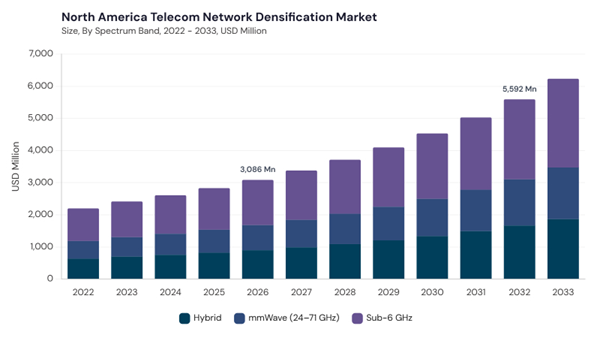
The North America Telecom Network Densification Market is experiencing substantial growth driven by rapid 5G deployment, increasing mobile data traffic, and the growing demand for low-latency, high-capacity connectivity solutions. Telecom operators across the region are aggressively investing in small cells, distributed antenna systems (DAS), fiber backhaul infrastructure, and advanced network optimization technologies to enhance network performance and coverage. Rising adoption of connected devices, IoT applications, cloud-based services, and bandwidth-intensive applications such as video streaming, AR/VR, and autonomous mobility solutions is significantly accelerating the need for dense telecom infrastructure across urban and suburban environments.
Furthermore, increasing investments in smart cities, private 5G networks, edge computing, and AI-driven network automation are strengthening market expansion across North America. The growing adoption of mmWave and hybrid spectrum deployments, combined with advancements in Open RAN and virtualization technologies, is enabling telecom operators to improve operational efficiency and scalability. Regulatory support for streamlined small cell deployment and increasing fiber network expansion initiatives are also contributing to the rapid growth of the North America Telecom Network Densification Market.
Spectrum Band Outlook
Based on Spectrum Band, the market is segmented into Sub-6 GHz, Hybrid, and mmWave (24-71 GHz). The Sub-6 GHz segment dominated the North America Telecom Network Densification Market in 2025 and is expected to reach USD 2.48 billion by 2032. The Hybrid segment is projected to witness strong growth due to increasing adoption of multi-band deployment strategies that combine broad coverage with ultra-high-capacity connectivity. Meanwhile, the mmWave segment is gaining traction in dense urban areas owing to its ability to deliver ultra-fast data speeds and low latency.Deployment Location Outlook
Based on Deployment Location, the market is segmented into Indoor and Outdoor. The Indoor segment acquired the highest revenue share in 2025 and is anticipated to reach USD 3.41 billion by 2032. Increasing demand for seamless indoor connectivity across commercial buildings, airports, stadiums, shopping malls, and enterprise facilities is driving segment growth. The Outdoor segment is also witnessing considerable expansion due to increasing deployment of small cells and street-level telecom infrastructure to support dense urban connectivity requirements.Application Outlook
Based on Application, the market is segmented into Enhanced Mobile Broadband, Fixed Wireless Access, Industrial IoT / Industry 4.0, Smart Cities & Public Venues, Connected & Autonomous Mobility, and Mission-Critical & Public Safety. The Enhanced Mobile Broadband segment dominated the market in 2025 and is projected to attain USD 1.82 billion by 2032 owing to rapidly increasing mobile data consumption and video streaming demand. The Connected & Autonomous Mobility segment is expected to witness notable growth due to increasing investments in connected vehicle infrastructure and intelligent transportation systems. Additionally, Industrial IoT / Industry 4.0 applications are gaining significant momentum as industries increasingly adopt automation and private 5G networks.
End User Outlook
Based on End User, the market is segmented into Telecom Operators, Enterprises & Private Network Owners, Neutral Host Providers, and Government & Public Safety Agencies. Telecom Operators accounted for the largest revenue share in the North America Telecom Network Densification Market in 2025 due to substantial investments in 5G infrastructure modernization and network capacity expansion. Enterprises & Private Network Owners are increasingly deploying densified private wireless networks to support industrial automation, secure connectivity, and mission-critical operations. Neutral Host Providers are also witnessing growing adoption as operators seek shared infrastructure models to reduce deployment costs and improve operational efficiency.Regional Outlook
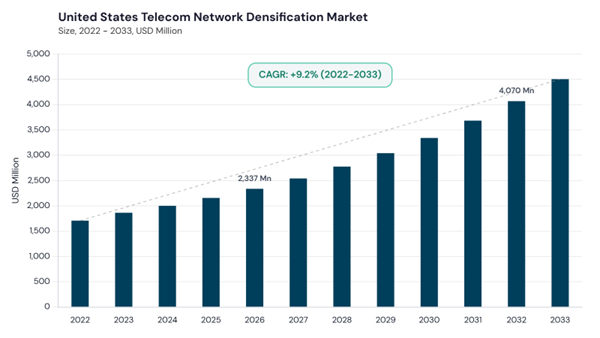
The United States accounted for the dominant share in the North America Telecom Network Densification Market owing to aggressive 5G rollouts, strong investments in fiber infrastructure, and increasing deployment of small cells across major metropolitan areas. Canada is also witnessing strong growth driven by expanding broadband initiatives and increasing investments in rural connectivity enhancement. Additionally, the growing focus on smart city development, AI-enabled telecom infrastructure, and edge computing is expected to continue supporting market growth across North America during the forecast period.List of Key Companies Profiled
- Nokia Corporation
- Telefonaktiebolaget LM Ericsson
- Deutsche Telekom AG
- Vodafone Group Plc
- Orange S.A.
- Cisco Systems, Inc.
- Huawei Technologies Co., Ltd.
- NEC Corporation
- CommScope Holding Company, Inc.
- Telefónica S.A.
Market Report Segmentation
By Spectrum Band- Sub-6 GHz
- Hybrid
- mmWave (24-71 GHz)
- Indoor
- Outdoor
- Enhanced Mobile Broadband
- Fixed Wireless Access
- Industrial IoT / Industry 4.0
- Smart Cities & Public Venues
- Connected & Autonomous Mobility
- Mission-Critical & Public Safety
- Telecom Operators
- Enterprises & Private Network Owners
- Neutral Host Providers
- Government & Public Safety Agencies
- United States
- Canada
- Mexico
- Rest of North America
Table of Contents
Chapter 1. North America Market1.1 Market Overview
1.2 Key Factors Impacting Market
1.2.1 Market Drivers
1.2.2 Market Restraints
1.2.3 Market Opportunities
1.2.4 Market Challenges
1.2.5 Market Trends
1.2.6 State of Competition
1.2.7 Market Consolidation
1.2.8 Key Customer Criteria
1.3 Product Life Cycle
1.4 Segmentation By Deployment Location
1.4.1 Indoor
1.4.2 Outdoor
1.5 Segmentation By Spectrum Band
1.5.1 Sub-6 GHz
1.5.2 mmWave (24-71 GHz)
1.5.3 Hybrid
1.6 Segmentation By Application
1.6.1 Enhanced Mobile Broadband
1.6.2 Fixed Wireless Access
1.6.3 Industrial IoT / Industry 4.0
1.6.4 Smart Cities & Public Venues
1.6.5 Mission-Critical & Public Safety
1.6.6 Connected & Autonomous Mobility
1.7 Segmentation By End User
1.7.1 Telecom Operators
1.7.2 Enterprises & Private Network Owners
1.7.3 Neutral Host Providers
1.7.4 Government & Public Safety Agencies
1.8 Segmentation By Country
1.8.1 United States
1.8.1.1 Segmentation By Spectrum Band
1.8.1.1.1 Sub-6 GHz
1.8.1.1.2 Hybrid
1.8.1.1.3 mmWave (24-71 GHz)
1.8.1.2 Segmentation By End User
1.8.1.2.1 Telecom Operators
1.8.1.2.2 Enterprises & Private Network Owners
1.8.1.2.3 Neutral Host Providers
1.8.1.2.4 Government & Public Safety Agencies
1.8.1.3 Segmentation By Deployment Location
1.8.1.3.1 Indoor
1.8.1.3.2 Outdoor
1.8.1.4 Segmentation By Application
1.8.1.4.1 Enhanced Mobile Broadband
1.8.1.4.2 Fixed Wireless Access
1.8.1.4.3 Industrial IoT / Industry 4.0
1.8.1.4.4 Smart Cities & Public Venues
1.8.1.4.5 Connected & Autonomous Mobility
1.8.1.4.6 Mission-Critical & Public Safety
1.8.2 Canada
1.8.2.1 Segmentation By Spectrum Band
1.8.2.1.1 Sub-6 GHz
1.8.2.1.2 Hybrid
1.8.2.1.3 mmWave (24-71 GHz)
1.8.2.2 Segmentation By End User
1.8.2.2.1 Telecom Operators
1.8.2.2.2 Enterprises & Private Network Owners
1.8.2.2.3 Neutral Host Providers
1.8.2.2.4 Government & Public Safety Agencies
1.8.2.3 Segmentation By Deployment Location
1.8.2.3.1 Indoor
1.8.2.3.2 Outdoor
1.8.2.4 Segmentation By Application
1.8.2.4.1 Enhanced Mobile Broadband
1.8.2.4.2 Fixed Wireless Access
1.8.2.4.3 Industrial IoT / Industry 4.0
1.8.2.4.4 Smart Cities & Public Venues
1.8.2.4.5 Connected & Autonomous Mobility
1.8.2.4.6 Mission-Critical & Public Safety
1.8.3 Mexico
1.8.3.1 Segmentation By Spectrum Band
1.8.3.1.1 Sub-6 GHz
1.8.3.1.2 Hybrid
1.8.3.1.3 mmWave (24-71 GHz)
1.8.3.2 Segmentation By End User
1.8.3.2.1 Telecom Operators
1.8.3.2.2 Enterprises & Private Network Owners
1.8.3.2.3 Neutral Host Providers
1.8.3.2.4 Government & Public Safety Agencies
1.8.3.3 Segmentation By Deployment Location
1.8.3.3.1 Indoor
1.8.3.3.2 Outdoor
1.8.3.4 Segmentation By Application
1.8.3.4.1 Enhanced Mobile Broadband
1.8.3.4.2 Fixed Wireless Access
1.8.3.4.3 Industrial IoT / Industry 4.0
1.8.3.4.4 Smart Cities & Public Venues
1.8.3.4.5 Connected & Autonomous Mobility
1.8.3.4.6 Mission-Critical & Public Safety
1.8.4 Rest of North America
1.8.4.1 Segmentation By Spectrum Band
1.8.4.1.1 Sub-6 GHz
1.8.4.1.2 Hybrid
1.8.4.1.3 mmWave (24-71 GHz)
1.8.4.2 Segmentation By End User
1.8.4.2.1 Telecom Operators
1.8.4.2.2 Enterprises & Private Network Owners
1.8.4.2.3 Neutral Host Providers
1.8.4.2.4 Government & Public Safety Agencies
1.8.4.3 Segmentation By Deployment Location
1.8.4.3.1 Indoor
1.8.4.3.2 Outdoor
1.8.4.4 Segmentation By Application
1.8.4.4.1 Enhanced Mobile Broadband
1.8.4.4.2 Fixed Wireless Access
1.8.4.4.3 Industrial IoT / Industry 4.0
1.8.4.4.4 Smart Cities & Public Venues
1.8.4.4.5 Connected & Autonomous Mobility
1.8.4.4.6 Mission-Critical & Public Safety
Chapter 2. Company Snapshot
2.1 American Tower Corporation - Company Profile (Telecom Network Densification Market)
2.1.1 Business Overview
2.1.2 Company Profile
2.1.3 Company Focus on Telecom Network Densification Market
2.1.4 Strategic Insights on Telecom Network Densification Market
2.1.5 Strategy Deployed for Telecom Network Densification Market
2.1.6 Product & Service Portfolio
2.1.7 Portfolio Categories
2.1.8 Key Products / Services (Representative)
2.1.9 Capability Overview
2.1.10 SWOT Analysis
2.1.11 Customers / End Users
2.1.12 Competitive Positioning
2.1.13 Key Differentiators
2.1.14 Portfolio Matrix
2.1.15 Analyst View
2.1.16 Future Outlook for Telecom Network Densification Market
2.2 Crown Castle Inc. - Company Profile (Telecom Network Densification Market)
2.2.1 Business Overview
2.2.2 Company Profile
2.2.3 Company Focus on Telecom Network Densification Market
2.2.4 Strategic Insights on Telecom Network Densification Market
2.2.5 Strategy Deployed for Telecom Network Densification Market
2.2.6 Product & Service Portfolio
2.2.7 Key Products / Services (Representative)
2.2.8 Capability Overview
2.2.9 Technology & Innovation Focus
2.2.10 SWOT Analysis
2.2.11 Customers / End Users
2.2.12 Competitive Positioning
2.2.13 Key Differentiators
2.2.14 Portfolio Matrix
2.2.15 Analyst View
2.2.16 Future Outlook for Telecom Network Densification Market
2.3 Cellnex Telecom, S.A. - Company Profile (Telecom Network Densification Market)
2.3.1 Business Overview
2.3.2 Company Profile
2.3.3 Company Focus on Telecom Network Densification Market
2.3.4 Strategic Insights on Telecom Network Densification Market
2.3.5 Strategy Deployed for Telecom Network Densification Market
2.3.6 Product & Service Portfolio
2.3.7 Key Products / Services (Representative)
2.3.8 Capability Overview
2.3.9 Technology & Innovation Focus
2.3.10 SWOT Analysis
2.3.11 Customers / End Users
2.3.12 Competitive Positioning
2.3.13 Key Differentiators
2.3.14 Portfolio Matrix
2.3.15 Analyst View
2.3.16 Future Outlook for Telecom Network Densification Market
2.4 ZTE Corporation - Company Profile (Telecom Network Densification Market)
2.4.1 Business Overview
2.4.2 Company Profile
2.4.3 Company Focus on Telecom Network Densification Market
2.4.4 Strategic Insights on Telecom Network Densification Market
2.4.5 Strategy Deployed for Telecom Network Densification Market
2.4.6 Product & Service Portfolio
2.4.7 Key Products / Services (Representative)
2.4.8 Capability Overview
2.4.9 Technology & Innovation Focus
2.4.10 SWOT Analysis
2.4.11 Customers / End Users
2.4.12 Competitive Positioning
2.4.13 Key Differentiators
2.4.14 Portfolio Matrix
2.4.15 Analyst View
2.4.16 Future Outlook for Telecom Network Densification Market
2.5 Indus Towers Limited - Company Profile (Telecom Network Densification Market)
2.5.1 Business Overview
2.5.2 Company Profile
2.5.3 Company Focus on Telecom Network Densification Market
2.5.4 Strategic Insights on Telecom Network Densification Market
2.5.5 Strategy Deployed for Telecom Network Densification Market
2.5.6 Product & Service Portfolio
2.5.7 Key Products / Services (Representative)
2.5.8 Capability Overview
2.5.9 Technology & Innovation Focus
2.5.10 SWOT Analysis
2.5.11 Customers / End Users
2.5.12 Competitive Positioning
2.5.13 Key Differentiators
2.5.14 Portfolio Matrix
2.5.15 Analyst View
2.5.16 Future Outlook for Telecom Network Densification Market
2.6 AT&T Inc. - Company Profile (Telecom Network Densification Market)
2.6.1 Business Overview
2.6.2 Company Profile
2.6.3 Company Focus on Telecom Network Densification Market
2.6.4 Strategic Insights on Telecom Network Densification Market
2.6.5 Strategy Deployed for Telecom Network Densification Market
2.6.6 Product & Service Portfolio
2.6.7 SWOT Analysis
2.6.8 Customers / End Users
2.6.9 Competitive Positioning
2.6.10 Key Differentiators
2.6.11 Portfolio Matrix
2.6.12 Analyst View
2.6.13 Future Outlook for Telecom Network Densification Market
2.7 Verizon Communications, Inc. - Company Profile (Telecom Network Densification Market)
2.7.1 Business Overview
2.7.2 Company Profile
2.7.3 Company Focus on Telecom Network Densification Market
2.7.4 Strategic Insights on Telecom Network Densification Market
2.7.5 Strategy Deployed for Telecom Network Densification Market
2.7.6 Product & Service Portfolio
2.7.7 Key Products / Services (Representative)
2.7.8 SWOT Analysis
2.7.9 Customers / End Users
2.7.10 Competitive Positioning
2.7.11 Key Differentiators
2.7.12 Portfolio Matrix
2.7.13 Analyst View
2.7.14 Future Outlook for Telecom Network Densification Market
2.7.15 Business Overview
2.7.16 Company Profile
2.7.17 Company Focus on Telecom Network Densification Market
2.7.18 Strategic Insights on Telecom Network Densification Market
2.7.19 Strategy Deployed for Telecom Network Densification Market
2.7.20 Product & Service Portfolio
2.7.21 SWOT Analysis
2.7.22 Customers / End Users
2.7.23 Competitive Positioning
2.7.24 Key Differentiators
2.7.25 Portfolio Matrix
2.7.26 Analyst View
2.7.27 Future Outlook for Telecom Network Densification Market
2.7.28 Business Overview
2.7.29 Key Information
2.7.30 Company Focus on Telecom Network Densification Market
2.7.31 Strategic Insights on Telecom Network Densification Market
2.7.32 Strategy Deployed for Telecom Network Densification Market
2.7.33 Product & Service Portfolio
2.7.34 SWOT Analysis
2.7.35 Customers / End Users
2.7.36 Competitive Positioning
2.7.37 Key Differentiators
2.7.38 Portfolio Matrix
2.7.39 Analyst View
2.7.40 Future Outlook for Telecom Network Densification Market
2.7.41 Business Overview
2.7.42 Key Information
2.7.43 Company Focus on Telecom Network Densification Market
2.7.44 Strategic Insights on Telecom Network Densification Market
2.7.45 Strategy Deployed for Telecom Network Densification Market
2.7.46 Product & Service Portfolio
2.7.47 Key Products / Services (Representative)
2.7.48 Capability Overview
2.7.49 Technology & Innovation Focus
2.7.50 SWOT Analysis (Telecom Network Densification Market)
2.7.51 Customers / End Users
2.7.52 Competitive Positioning
2.7.53 Key Differentiators
2.7.54 Portfolio Matrix
2.7.55 Analyst View
2.7.56 Future Outlook for Telecom Network Densification Market
Companies Mentioned
- Nokia Corporation
- Telefonaktiebolaget LM Ericsson
- Cisco Systems, Inc.
- CommScope Holding Company, Inc.
- Crown Castle Inc.
- American Tower Corporation
- Verizon Communications Inc.
- AT&T Inc.
- T-Mobile US, Inc.
- Qualcomm Incorporated


