



The LAMEA Autonomous Telecom Networks Market is forecasted to reach USD 1.35 billion by 2029, growing at a CAGR of 22.1% during the forecast period (2026-2033).
The LAMEA Autonomous Telecom Networks Market is witnessing strong momentum owing to increasing investments in telecom modernization, expansion of digital infrastructure, and rising deployment of AI-driven network automation technologies across Latin America, the Middle East, and Africa. Telecom operators throughout the region are increasingly focusing on self-optimizing and self-healing networks to improve operational efficiency, reduce service disruptions, and support the growing demand for high-speed connectivity and digital services. The integration of advanced technologies such as artificial intelligence, machine learning, cloud computing, and software-defined networking is transforming telecom operations and accelerating the adoption of autonomous telecom network solutions across LAMEA.
Furthermore, the increasing rollout of 5G infrastructure, growth of IoT ecosystems, and rising demand for edge computing capabilities are significantly contributing to market expansion. Countries across the Middle East are aggressively investing in smart city projects, industrial automation, and AI-enabled digital transformation initiatives, while Latin American and African telecom operators are increasingly adopting automation technologies to optimize network performance and improve coverage in underserved areas. In addition, the growing focus on predictive maintenance, network orchestration, cybersecurity automation, and intelligent traffic management is supporting the long-term growth of the LAMEA Autonomous Telecom Networks Market.
Additionally, telecom operators across LAMEA are increasingly focusing on AI-driven analytics, predictive maintenance, cybersecurity automation, and edge-enabled intelligent networking to manage growing network complexity and improve customer experience. The adoption of cloud-native architectures, software-defined networking, and network function virtualization is further enabling scalable and flexible telecom operations throughout the region. These developments are expected to continue driving strong market growth across LAMEA during the forecast period.
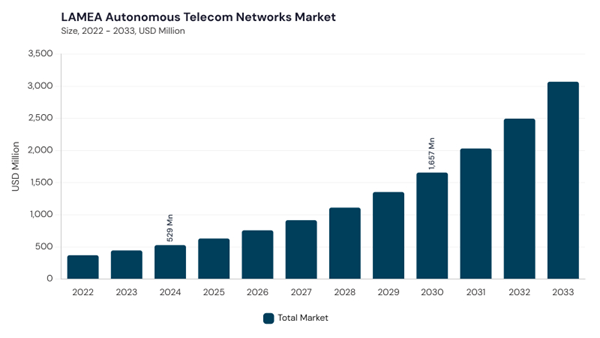
The LAMEA Autonomous Telecom Networks Market is witnessing strong momentum owing to increasing investments in telecom modernization, expansion of digital infrastructure, and rising deployment of AI-driven network automation technologies across Latin America, the Middle East, and Africa. Telecom operators throughout the region are increasingly focusing on self-optimizing and self-healing networks to improve operational efficiency, reduce service disruptions, and support the growing demand for high-speed connectivity and digital services. The integration of advanced technologies such as artificial intelligence, machine learning, cloud computing, and software-defined networking is transforming telecom operations and accelerating the adoption of autonomous telecom network solutions across LAMEA.
Furthermore, the increasing rollout of 5G infrastructure, growth of IoT ecosystems, and rising demand for edge computing capabilities are significantly contributing to market expansion. Countries across the Middle East are aggressively investing in smart city projects, industrial automation, and AI-enabled digital transformation initiatives, while Latin American and African telecom operators are increasingly adopting automation technologies to optimize network performance and improve coverage in underserved areas. In addition, the growing focus on predictive maintenance, network orchestration, cybersecurity automation, and intelligent traffic management is supporting the long-term growth of the LAMEA Autonomous Telecom Networks Market.
Deployment Mode Outlook
Based on Deployment Mode, the market is segmented into Cloud-Based, On-Premises, and Hybrid. The Cloud-Based segment dominated the LAMEA Autonomous Telecom Networks Market in 2025 and is projected to reach USD 674.3 million by 2029. The Hybrid segment is anticipated to register a CAGR of 21.3% during the forecast period (2026-2033). Meanwhile, the On-Premises segment maintained a considerable market share in 2025 owing to increasing focus on data security, regulatory compliance, and infrastructure control across telecom operations.Network Layer Outlook
Based on Network Layer, the market is segmented into Radio Access Network, Core Network, End-to-End Network Orchestration, Transport Network, and Edge Network. The Radio Access Network segment acquired the largest revenue share in the LAMEA Autonomous Telecom Networks Market in 2025 and would reach USD 488.2 million by 2029. The Edge Network segment is expected to witness a CAGR of 22.4% during the forecast period (2026-2033). In addition, the End-to-End Network Orchestration segment is gaining strong traction owing to increasing demand for centralized autonomous network management and intelligent workflow automation.Component Outlook
Based on Component, the market is segmented into Solutions and Services. The Solutions segment accounted for the highest market share in 2025 and is expected to attain a market value of USD 856.7 million by 2029. The Services segment is projected to record a CAGR of 21.9% during the forecast period (2026-2033) due to rising demand for consulting, integration, deployment, and managed services associated with autonomous telecom networks.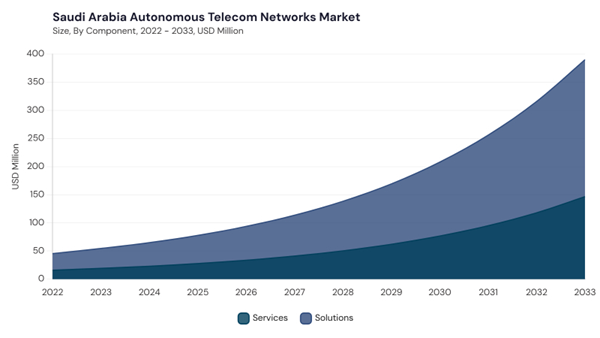
End User Outlook
Based on End User, the market is segmented into Tier-1 Mobile Network Operators, Tier-2 & Tier-3 Mobile Network Operators, Private Network Owners, Mobile Virtual Network Operators, and Neutral Host Providers. The Tier-1 Mobile Network Operators segment dominated the LAMEA Autonomous Telecom Networks Market in 2025 owing to large-scale investments in AI-enabled network infrastructure modernization and digital transformation initiatives. The Private Network Owners segment is witnessing increasing adoption driven by rising deployment of private 5G networks, industrial automation, and enterprise connectivity solutions. Moreover, the Neutral Host Providers segment is expected to register significant growth during the forecast period due to increasing demand for cost-efficient shared telecom infrastructure models.Country Outlook
The Middle East region represented a major contributor to the LAMEA Autonomous Telecom Networks Market owing to rising government investments in smart cities, AI adoption, cloud infrastructure, and advanced telecom modernization initiatives. Countries such as the UAE and Saudi Arabia are actively deploying AI-powered telecom automation platforms to support next-generation digital infrastructure and intelligent connectivity ecosystems. Additionally, Africa is increasingly witnessing adoption of autonomous telecom technologies to enhance rural connectivity, optimize operational efficiency, and improve service quality across expanding telecom networks.Additionally, telecom operators across LAMEA are increasingly focusing on AI-driven analytics, predictive maintenance, cybersecurity automation, and edge-enabled intelligent networking to manage growing network complexity and improve customer experience. The adoption of cloud-native architectures, software-defined networking, and network function virtualization is further enabling scalable and flexible telecom operations throughout the region. These developments are expected to continue driving strong market growth across LAMEA during the forecast period.
List of Key Companies Profiled
- Nokia Corporation
- Telefonaktiebolaget LM Ericsson
- Huawei Technologies Co., Ltd.
- Cisco Systems, Inc.
- IBM Corporation
- Hewlett Packard Enterprise Company
- Juniper Networks, Inc.
- VMware, Inc.
- NEC Corporation
- ZTE Corporation
Market Report Segmentation
By Deployment Mode- Cloud-Based
- On-Premises
- Hybrid
- Radio Access Network
- Core Network
- End-to-End Network Orchestration
- Transport Network
- Edge Network
- Solutions
- Services
- Tier-1 Mobile Network Operators
- Tier-2 & Tier-3 Mobile Network Operators
- Private Network Owners
- Mobile Virtual Network Operators
- Neutral Host Providers
- Brazil
- Argentina
- UAE
- Saudi Arabia
- South Africa
- Nigeria
- Rest of LAMEA
Table of Contents
Chapter 1. LAMEA Market1.1 Market Overview
1.2 Key Factors Impacting Market
1.2.1 Market Drivers
1.2.2 Market Restraints
1.2.3 Market Opportunities
1.2.4 Market Challenges
1.2.5 Market Trends
1.2.6 State of Competition
1.2.7 Market Consolidation
1.2.8 Key Customer Criteria
1.3 Product Life Cycle
1.4 Segmentation By Component
1.4.1 Solutions
1.4.2 Services
1.5 Segmentation By Network Layer
1.5.1 Radio Access Network
1.5.2 Core Network
1.5.3 Transport Network
1.5.4 Edge Network
1.5.5 End-to-End Network Orchestration
1.6 Segmentation By Deployment Mode
1.6.1 On-Premises
1.6.2 Cloud-Based
1.6.3 Hybrid
1.7 Segmentation By End User
1.7.1 Tier-1 Mobile Network Operators
1.7.2 Tier-2 & Tier-3 Mobile Network Operators
1.7.3 Mobile Virtual Network Operators
1.7.4 Private Network Owners
1.7.5 Neutral Host Providers
1.8 Segmentation By Country
1.8.1 Brazil
1.8.1.1 Segmentation By Component
1.8.1.1.1 Solutions
1.8.1.1.2 Services
1.8.1.2 Segmentation By Network Layer
1.8.1.2.1 Radio Access Network
1.8.1.2.2 Core Network
1.8.1.2.3 End-to-End Network Orchestration
1.8.1.2.4 Transport Network
1.8.1.2.5 Edge Network
1.8.1.3 Segmentation By Deployment Mode
1.8.1.3.1 Cloud-Based
1.8.1.3.2 On-Premises
1.8.1.3.3 Hybrid
1.8.1.4 Segmentation By End User
1.8.1.4.1 Tier-1 Mobile Network Operators
1.8.1.4.2 Tier-2 & Tier-3 Mobile Network Operators
1.8.1.4.3 Private Network Owners
1.8.1.4.4 Mobile Virtual Network Operators
1.8.1.4.5 Neutral Host Providers
1.8.2 Argentina
1.8.2.1 Segmentation By Component
1.8.2.1.1 Solutions
1.8.2.1.2 Services
1.8.2.2 Segmentation By Network Layer
1.8.2.2.1 Radio Access Network
1.8.2.2.2 Core Network
1.8.2.2.3 End-to-End Network Orchestration
1.8.2.2.4 Transport Network
1.8.2.2.5 Edge Network
1.8.2.3 Segmentation By Deployment Mode
1.8.2.3.1 Cloud-Based
1.8.2.3.2 On-Premises
1.8.2.3.3 Hybrid
1.8.2.4 Segmentation By End User
1.8.2.4.1 Tier-1 Mobile Network Operators
1.8.2.4.2 Tier-2 & Tier-3 Mobile Network Operators
1.8.2.4.3 Private Network Owners
1.8.2.4.4 Mobile Virtual Network Operators
1.8.2.4.5 Neutral Host Providers
1.8.3 UAE
1.8.3.1 Segmentation By Component
1.8.3.1.1 Solutions
1.8.3.1.2 Services
1.8.3.2 Segmentation By Network Layer
1.8.3.2.1 Radio Access Network
1.8.3.2.2 Core Network
1.8.3.2.3 End-to-End Network Orchestration
1.8.3.2.4 Transport Network
1.8.3.2.5 Edge Network
1.8.3.3 Segmentation By Deployment Mode
1.8.3.3.1 Cloud-Based
1.8.3.3.2 On-Premises
1.8.3.3.3 Hybrid
1.8.3.4 Segmentation By End User
1.8.3.4.1 Tier-1 Mobile Network Operators
1.8.3.4.2 Tier-2 & Tier-3 Mobile Network Operators
1.8.3.4.3 Private Network Owners
1.8.3.4.4 Mobile Virtual Network Operators
1.8.3.4.5 Neutral Host Providers
1.8.4 Saudi Arabia
1.8.4.1 Segmentation By Component
1.8.4.1.1 Solutions
1.8.4.1.2 Services
1.8.4.2 Segmentation By Network Layer
1.8.4.2.1 Radio Access Network
1.8.4.2.2 Core Network
1.8.4.2.3 End-to-End Network Orchestration
1.8.4.2.4 Transport Network
1.8.4.2.5 Edge Network
1.8.4.3 Segmentation By Deployment Mode
1.8.4.3.1 Cloud-Based
1.8.4.3.2 On-Premises
1.8.4.3.3 Hybrid
1.8.4.4 Segmentation By End User
1.8.4.4.1 Tier-1 Mobile Network Operators
1.8.4.4.2 Tier-2 & Tier-3 Mobile Network Operators
1.8.4.4.3 Private Network Owners
1.8.4.4.4 Mobile Virtual Network Operators
1.8.4.4.5 Neutral Host Providers
1.8.5 South Africa
1.8.5.1 Segmentation By Component
1.8.5.1.1 Solutions
1.8.5.1.2 Services
1.8.5.2 Segmentation By Network Layer
1.8.5.2.1 Radio Access Network
1.8.5.2.2 Core Network
1.8.5.2.3 End-to-End Network Orchestration
1.8.5.2.4 Transport Network
1.8.5.2.5 Edge Network
1.8.5.3 Segmentation By Deployment Mode
1.8.5.3.1 Cloud-Based
1.8.5.3.2 On-Premises
1.8.5.3.3 Hybrid
1.8.5.4 Segmentation By End User
1.8.5.4.1 Tier-1 Mobile Network Operators
1.8.5.4.2 Tier-2 & Tier-3 Mobile Network Operators
1.8.5.4.3 Private Network Owners
1.8.5.4.4 Mobile Virtual Network Operators
1.8.5.4.5 Neutral Host Providers
1.8.6 Nigeria
1.8.6.1 Segmentation By Component
1.8.6.1.1 Solutions
1.8.6.1.2 Services
1.8.6.2 Segmentation By Network Layer
1.8.6.2.1 Radio Access Network
1.8.6.2.2 Core Network
1.8.6.2.3 End-to-End Network Orchestration
1.8.6.2.4 Transport Network
1.8.6.2.5 Edge Network
1.8.6.3 Segmentation By Deployment Mode
1.8.6.3.1 Cloud-Based
1.8.6.3.2 On-Premises
1.8.6.3.3 Hybrid
1.8.6.4 Segmentation By End User
1.8.6.4.1 Tier-1 Mobile Network Operators
1.8.6.4.2 Tier-2 & Tier-3 Mobile Network Operators
1.8.6.4.3 Private Network Owners
1.8.6.4.4 Mobile Virtual Network Operators
1.8.6.4.5 Neutral Host Providers
1.8.7 Rest of LAMEA
1.8.7.1 Segmentation By Component
1.8.7.1.1 Solutions
1.8.7.1.2 Services
1.8.7.2 Segmentation By Network Layer
1.8.7.2.1 Radio Access Network
1.8.7.2.2 Core Network
1.8.7.2.3 End-to-End Network Orchestration
1.8.7.2.4 Transport Network
1.8.7.2.5 Edge Network
1.8.7.3 Segmentation By Deployment Mode
1.8.7.3.1 Cloud-Based
1.8.7.3.2 On-Premises
1.8.7.3.3 Hybrid
1.8.7.4 Segmentation By End User
1.8.7.4.1 Tier-1 Mobile Network Operators
1.8.7.4.2 Tier-2 & Tier-3 Mobile Network Operators
1.8.7.4.3 Private Network Owners
1.8.7.4.4 Mobile Virtual Network Operators
1.8.7.4.5 Neutral Host Providers
Chapter 2. Company Snapshot
2.1 Ericsson AB
2.1.1 Business Overview
2.1.2 Key Information
2.1.3 Company Focus
2.1.4 Strategic Insights
2.1.5 Strategy Deployed
2.1.6 Product & Service Portfolio
2.1.7 Capability Overview
2.1.8 Technology & Innovation Focus
2.1.9 Customers / End Users
2.1.10 Competitive Positioning
2.1.11 Key Differentiators
2.1.12 Portfolio Matrix
2.1.13 SWOT Analysis
2.1.14 Future Outlook
2.2 Nokia Corporation
2.2.1 Business Overview
2.2.2 Key Information
2.2.3 Company Focus
2.2.4 Strategic Insights
2.2.5 Strategy Deployed
2.2.6 Product & Service Portfolio
2.2.7 Capability Overview
2.2.8 Technology & Innovation Focus
2.2.9 Customers / End Users
2.2.10 Competitive Positioning
2.2.11 Key Differentiators
2.2.12 Portfolio Matrix
2.2.13 SWOT Analysis
2.2.14 Future Outlook
2.3 Huawei Technologies Co., Ltd. (Huawei Investment & Holding Co., Ltd.)
2.3.1 Business Overview
2.3.2 Key Information
2.3.3 Company Focus
2.3.4 Strategic Insights
2.3.5 Strategy Deployed
2.3.6 Product & Service Portfolio
2.3.7 Capability Overview
2.3.8 Technology & Innovation Focus
2.3.9 Customers / End Users
2.3.10 Competitive Positioning
2.3.11 Key Differentiators
2.3.12 Portfolio Matrix
2.3.13 SWOT Analysis
2.3.14 Future Outlook
2.4 ZTE Corporation
2.4.1 Business Overview
2.4.2 Key Information
2.4.3 Company Focus
2.4.4 Strategic Insights
2.4.5 Strategy Deployed
2.4.6 Product & Service Portfolio
2.4.7 Capability Overview
2.4.8 Technology & Innovation Focus
2.4.9 Customers / End Users
2.4.10 Competitive Positioning
2.4.11 Key Differentiators
2.4.12 Portfolio Matrix
2.4.13 SWOT Analysis
2.4.14 Future Outlook
2.5 Samsung Electronics Co., Ltd. (Samsung Group)
2.5.1 Business Overview
2.5.2 Key Information
2.5.3 Company Focus
2.5.4 Strategic Insights
2.5.5 Strategy Deployed
2.5.6 Product & Service Portfolio
2.5.7 Capability Overview
2.5.8 Technology & Innovation Focus
2.5.9 Customers / End Users
2.5.10 Competitive Positioning
2.5.11 Key Differentiators
2.5.12 Portfolio Matrix
2.5.13 SWOT Analysis
2.5.14 Future Outlook
2.6 Cisco Systems, Inc.
2.6.1 Business Overview
2.6.2 Key Information
2.6.3 Company Focus
2.6.4 Strategic Insights
2.6.5 Strategy Deployed
2.6.6 Product & Service Portfolio
2.6.7 Capability Overview
2.6.8 Technology & Innovation Focus
2.6.9 Customers / End Users
2.6.10 Competitive Positioning
2.6.11 Key Differentiators
2.6.12 Portfolio Matrix
2.6.13 SWOT Analysis
2.6.14 Future Outlook
2.7 IBM Corporation
2.7.1 Business Overview
2.7.2 Key Information
2.7.3 Company Focus
2.7.4 Strategic Insights
2.7.5 Strategy Deployed
2.7.6 Product & Service Portfolio
2.7.7 Capability Overview
2.7.8 Technology & Innovation Focus
2.7.9 Customers / End Users
2.7.10 Competitive Positioning
2.7.11 Key Differentiators
2.7.12 Portfolio Matrix
2.7.13 SWOT Analysis
2.7.14 Future Outlook
2.8 NEC Corporation
2.8.1 Business Overview
2.8.2 Key Information
2.8.3 Company Focus
2.8.4 Strategic Insights
2.8.5 Strategy Deployed
2.8.6 Product & Service Portfolio
2.8.7 Capability Overview
2.8.8 Technology & Innovation Focus
2.8.9 Customers / End Users
2.8.10 Competitive Positioning
2.8.11 Key Differentiators
2.8.12 Portfolio Matrix
2.8.13 SWOT Analysis
2.8.14 Future Outlook
2.9 Hewlett Packard Enterprise Company
2.9.1 Business Overview
2.9.2 Key Information
2.9.3 Company Focus
2.9.4 Strategic Insights
2.9.5 Strategy Deployed
2.9.6 Product & Service Portfolio
2.9.7 Capability Overview
2.9.8 Technology & Innovation Focus
2.9.9 Customers / End Users
2.9.10 Competitive Positioning
2.9.11 Key Differentiators
2.9.12 Portfolio Matrix
2.9.13 SWOT Analysis
2.9.14 Future Outlook
2.10 Ciena Corporation
2.10.1 Business Overview
2.10.2 Key Information
2.10.3 Company Focus
2.10.4 Strategic Insights
2.10.5 Strategy Deployed
2.10.6 Product & Service Portfolio
2.10.7 Capability Overview
2.10.8 Technology & Innovation Focus
2.10.9 Customers / End Users
2.10.10 Competitive Positioning
2.10.11 Key Differentiators
2.10.12 Portfolio Matrix
2.10.13 SWOT Analysis
2.10.14 Future Outlook
Companies Mentioned
- Nokia Corporation
- Telefonaktiebolaget LM Ericsson
- Huawei Technologies Co., Ltd.
- Cisco Systems, Inc.
- IBM Corporation
- Hewlett Packard Enterprise Company
- Juniper Networks, Inc.
- VMware, Inc.
- NEC Corporation
- ZTE Corporation


