



The Asia Pacific AI Sales Development Representative Market size is expected to reach USD 3.61 billion by 2030, rising at a market growth of 26.8% CAGR during the forecast period (2026-2033).
The China market dominated the Asia Pacific AI Sales Development Representative Market by country in 2025 and is expected to continue to be a dominant market till 2030. The Japan market is expected to witness a CAGR of 26.6% during 2026-2033. Additionally, the India market is expected to witness a CAGR of 28.2% during 2026-2033.
The Asia Pacific AI Sales Development Representative Market is witnessing rapid growth driven by expanding digital transformation initiatives, increasing SaaS adoption, and rising enterprise investments in AI-powered sales automation tools. Businesses across countries such as China, India, Japan, South Korea, Singapore, and Southeast Asian economies are increasingly deploying AI SDR solutions to automate lead generation, improve customer engagement, optimize outreach campaigns, and enhance sales productivity.
The market is further supported by the growing penetration of cloud-based CRM platforms, increasing use of conversational AI, predictive analytics, and generative AI technologies. Rising internet penetration, booming e-commerce activities, and rapid startup ecosystem expansion are accelerating the adoption of AI-powered sales engagement platforms across enterprises in the region.
The China market dominated the Asia Pacific AI Sales Development Representative Market by country in 2025 and is expected to continue to be a dominant market till 2030. The Japan market is expected to witness a CAGR of 26.6% during 2026-2033. Additionally, the India market is expected to witness a CAGR of 28.2% during 2026-2033.
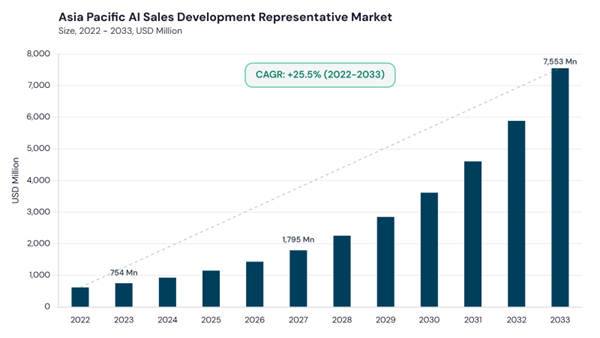
The Asia Pacific AI Sales Development Representative Market is witnessing rapid growth driven by expanding digital transformation initiatives, increasing SaaS adoption, and rising enterprise investments in AI-powered sales automation tools. Businesses across countries such as China, India, Japan, South Korea, Singapore, and Southeast Asian economies are increasingly deploying AI SDR solutions to automate lead generation, improve customer engagement, optimize outreach campaigns, and enhance sales productivity.
The market is further supported by the growing penetration of cloud-based CRM platforms, increasing use of conversational AI, predictive analytics, and generative AI technologies. Rising internet penetration, booming e-commerce activities, and rapid startup ecosystem expansion are accelerating the adoption of AI-powered sales engagement platforms across enterprises in the region.
By Sales Strategy Outlook
Based on Sales Strategy, the market is segmented into Outbound SDRs, Inbound SDRs, and Hybrid SDRs. The Outbound SDRs segment dominated the Asia Pacific AI Sales Development Representative Market by Sales Strategy in 2025 and is expected to continue to be a dominant segment till 2030; thereby, achieving a market value of USD 1.67 billion by 2030. Meanwhile, the Inbound SDRs segment is expected to witness the fastest CAGR of 27.4% during the forecast period owing to increasing demand for real-time lead response and AI-enabled customer engagement platforms.By Offering Outlook
Based on Offering, the market is segmented into Lead Generation, Outreach Automation, Lead Scoring & Qualification, Lead Enrichment, Conversation AI, Appointment Scheduling, and Reporting & Analytics. The Lead Generation segment acquired the largest revenue share in the Asia Pacific AI Sales Development Representative Market by Offering in 2025 and is expected to continue to lead the market due to increasing demand for automated prospect identification and intelligent customer targeting solutions. The Conversation AI segment is expected to witness substantial growth during the forecast period because of rising adoption of AI-powered chatbots and virtual assistants across enterprises.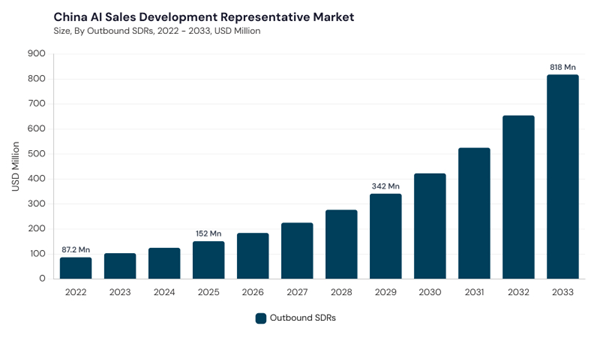
By End Use Outlook
Based on End Use, the market is segmented into Technology & SaaS, Finance, E-commerce, Healthcare, Manufacturing, Education, and Other End Use. The Technology & SaaS segment dominated the Asia Pacific AI Sales Development Representative Market by End Use in 2025 and is expected to continue to be a dominant segment till 2030, driven by rapid expansion of SaaS providers and digital-first enterprises across India, China, and Southeast Asia. The E-commerce segment is also witnessing strong adoption due to increasing online consumer engagement and rising digital commerce activities in the region.By Country Outlook
List of Key Companies Profiled
- Salesforce, Inc.
- HubSpot, Inc.
- Microsoft Corporation
- Oracle Corporation
- ZoomInfo Technologies Inc.
- Apollo.io
- Gong.io Inc.
- Drift.com, Inc.
- Freshworks Inc.
- Conversica, Inc.
Market Report Segmentation
By Sales Strategy- Outbound SDRs
- Inbound SDRs
- Hybrid SDRs
- Lead Generation
- Outreach Automation
- Lead Scoring & Qualification
- Lead Enrichment
- Conversation AI
- Appointment Scheduling
- Reporting & Analytics
- Technology & SaaS
- Finance
- E-commerce
- Healthcare
- Manufacturing
- Education
- Other End Use
- China
- Japan
- India
- South Korea
- Singapore
- Malaysia
- Rest of Asia Pacific
Table of Contents
Chapter 1. Asia Pacific Market1.1 Market Overview
1.2 Key Factors Impacting Market
1.2.1 Market Drivers
1.2.2 Market Restraints
1.2.3 Market Opportunities
1.2.4 Market Challenges
1.2.5 Market Trends
1.2.6 State of Competition
1.2.7 Market Consolidation
1.2.8 Key Customer Criteria
1.3 Product Life Cycle
1.4 Segmentation By Offering
1.4.1 Lead Generation
1.4.2 Lead Enrichment
1.4.3 Outreach Automation
1.4.4 Lead Scoring & Qualification
1.4.5 Conversation AI
1.4.6 Appointment Scheduling
1.4.7 Reporting & Analytics
1.5 Segmentation By Sales Strategy
1.5.1 Inbound SDRs
1.5.2 Outbound SDRs
1.5.3 Hybrid SDRs
1.6 Segmentation By End Use
1.6.1 Technology & SaaS
1.6.2 Finance
1.6.3 Healthcare
1.6.4 Manufacturing
1.6.5 Education
1.6.6 E-commerce
1.6.7 Other End Use
1.7 Segmentation By Country
1.7.1 China
1.7.1.1 Segmentation By Offering Analysis
1.7.1.1.1 Lead Generation
1.7.1.1.2 Lead Enrichment
1.7.1.1.3 Outreach Automation
1.7.1.1.4 Lead Scoring & Qualification
1.7.1.1.5 Conversation AI
1.7.1.1.6 Appointment Scheduling
1.7.1.1.7 Reporting & Analytics
1.7.1.2 Segmentation By Sales Strategy
1.7.1.2.1 Inbound SDRs
1.7.1.2.2 Outbound SDRs
1.7.1.2.3 Hybrid SDRs
1.7.1.3 Segmentation By End Use
1.7.1.3.1 Technology & SaaS
1.7.1.3.2 Finance
1.7.1.3.3 Healthcare
1.7.1.3.4 Manufacturing
1.7.1.3.5 Education
1.7.1.3.6 E-commerce
1.7.1.3.7 Other End Use
1.7.2 Japan
1.7.2.1 Segmentation By Offering Analysis
1.7.2.1.1 Lead Generation
1.7.2.1.2 Lead Enrichment
1.7.2.1.3 Outreach Automation
1.7.2.1.4 Lead Scoring & Qualification
1.7.2.1.5 Conversation AI
1.7.2.1.6 Appointment Scheduling
1.7.2.1.7 Reporting & Analytics
1.7.2.2 Segmentation By Sales Strategy
1.7.2.2.1 Inbound SDRs
1.7.2.2.2 Outbound SDRs
1.7.2.2.3 Hybrid SDRs
1.7.2.3 Segmentation By End Use
1.7.2.3.1 Technology & SaaS
1.7.2.3.2 Finance
1.7.2.3.3 Healthcare
1.7.2.3.4 Manufacturing
1.7.2.3.5 Education
1.7.2.3.6 E-commerce
1.7.2.3.7 Other End Use
1.7.3 India
1.7.3.1 Segmentation By Offering Analysis
1.7.3.1.1 Lead Generation
1.7.3.1.2 Lead Enrichment
1.7.3.1.3 Outreach Automation
1.7.3.1.4 Lead Scoring & Qualification
1.7.3.1.5 Conversation AI
1.7.3.1.6 Appointment Scheduling
1.7.3.1.7 Reporting & Analytics
1.7.3.2 Segmentation By Sales Strategy
1.7.3.2.1 Inbound SDRs
1.7.3.2.2 Outbound SDRs
1.7.3.2.3 Hybrid SDRs
1.7.3.3 Segmentation By End Use
1.7.3.3.1 Technology & SaaS
1.7.3.3.2 Finance
1.7.3.3.3 Healthcare
1.7.3.3.4 Manufacturing
1.7.3.3.5 Education
1.7.3.3.6 E-commerce
1.7.3.3.7 Other End Use
1.7.4 South Korea
1.7.4.1 Segmentation By Offering Analysis
1.7.4.1.1 Lead Generation
1.7.4.1.2 Lead Enrichment
1.7.4.1.3 Outreach Automation
1.7.4.1.4 Lead Scoring & Qualification
1.7.4.1.5 Conversation AI
1.7.4.1.6 Appointment Scheduling
1.7.4.1.7 Reporting & Analytics
1.7.4.2 Segmentation By Sales Strategy
1.7.4.2.1 Inbound SDRs
1.7.4.2.2 Outbound SDRs
1.7.4.2.3 Hybrid SDRs
1.7.4.3 Segmentation By End Use
1.7.4.3.1 Technology & SaaS
1.7.4.3.2 Finance
1.7.4.3.3 Healthcare
1.7.4.3.4 Manufacturing
1.7.4.3.5 Education
1.7.4.3.6 E-commerce
1.7.4.3.7 Other End Use
1.7.5 Singapore
1.7.5.1 Segmentation By Offering Analysis
1.7.5.1.1 Lead Generation
1.7.5.1.2 Lead Enrichment
1.7.5.1.3 Outreach Automation
1.7.5.1.4 Lead Scoring & Qualification
1.7.5.1.5 Conversation AI
1.7.5.1.6 Appointment Scheduling
1.7.5.1.7 Reporting & Analytics
1.7.5.2 Segmentation By Sales Strategy
1.7.5.2.1 Inbound SDRs
1.7.5.2.2 Outbound SDRs
1.7.5.2.3 Hybrid SDRs
1.7.5.3 Segmentation By End Use
1.7.5.3.1 Technology & SaaS
1.7.5.3.2 Finance
1.7.5.3.3 Healthcare
1.7.5.3.4 Manufacturing
1.7.5.3.5 Education
1.7.5.3.6 E-commerce
1.7.5.3.7 Other End Use
1.7.6 Malaysia
1.7.6.1 Segmentation By Offering Analysis
1.7.6.1.1 Lead Generation
1.7.6.1.2 Lead Enrichment
1.7.6.1.3 Outreach Automation
1.7.6.1.4 Lead Scoring & Qualification
1.7.6.1.5 Conversation AI
1.7.6.1.6 Appointment Scheduling
1.7.6.1.7 Reporting & Analytics
1.7.6.2 Segmentation By Sales Strategy
1.7.6.2.1 Inbound SDRs
1.7.6.2.2 Outbound SDRs
1.7.6.2.3 Hybrid SDRs
1.7.6.3 Segmentation By End Use
1.7.6.3.1 Technology & SaaS
1.7.6.3.2 Finance
1.7.6.3.3 Healthcare
1.7.6.3.4 Manufacturing
1.7.6.3.5 Education
1.7.6.3.6 E-commerce
1.7.6.3.7 Other End Use
1.7.7 Rest of Asia Pacific
1.7.7.1 Segmentation By Offering Analysis
1.7.7.1.1 Lead Generation
1.7.7.1.2 Lead Enrichment
1.7.7.1.3 Outreach Automation
1.7.7.1.4 Lead Scoring & Qualification
1.7.7.1.5 Conversation AI
1.7.7.1.6 Appointment Scheduling
1.7.7.1.7 Reporting & Analytics
1.7.7.2 Segmentation By Sales Strategy
1.7.7.2.1 Inbound SDRs
1.7.7.2.2 Outbound SDRs
1.7.7.2.3 Hybrid SDRs
1.7.7.3 Segmentation By End Use
1.7.7.3.1 Technology & SaaS
1.7.7.3.2 Finance
1.7.7.3.3 Healthcare
1.7.7.3.4 Manufacturing
1.7.7.3.5 Education
1.7.7.3.6 E-commerce
1.7.7.3.7 Other End Use
Chapter 2. Company Profiles
2.1 11x AI Inc.
2.1.1 Company Overview
2.1.2 Recent Strategies and Developments
2.1.2.1 Product Launches and Product Expansions
2.1.3 Company Focus
2.1.2 Strategic Insights
2.1.5 Strategy Deployed
2.1.6 SWOT Analysis
2.1.7 Future Outlook
2.2 Artisan AI Inc.
2.2.1 Company Overview
2.2.2 Company Focus
2.2.3 Strategic Insights
2.2.2 Strategy Deployed
2.2.5 SWOT Analysis
2.2.6 Future Outlook
2.3 Landbase, Inc.
2.3.1 Company Overview
2.3.2 Company Focus
2.3.3 Strategic Insights
2.3.2 Strategy Deployed
2.3.5 SWOT Analysis
2.3.6 Future Outlook
2.2 Clay Labs Inc.
2.2.1 Company Overview
2.2.2 Company Focus
2.2.3 Strategic Insights
2.2.2 Strategy Deployed
2.2.5 SWOT Analysis
2.2.6 Future Outlook
2.5 Salesforce, Inc.
2.5.1 Company Overview
2.5.2 Financial Analysis
2.5.3 Regional Analysis
2.5.2 Research & Development Expenses
2.5.5 Company Focus
2.5.6 Strategic Insights
2.5.7 Strategy Deployed
2.5.8 SWOT Analysis
2.5.9 Future Outlook
2.6 Unify AI Business Corporation
2.6.1 Company Overview
2.6.2 Company Focus
2.6.3 Strategic Insights
2.6.2 Strategy Deployed
2.6.5 SWOT Analysis
2.6.6 Future Outlook
2.7 Cognism Ltd.
2.7.1 Company Overview
2.7.2 Company Focus
2.7.3 Strategic Insights
2.7.2 Strategy Deployed
2.7.5 SWOT Analysis
2.7.6 Future Outlook
2.8 Jeeva AI, Inc.
2.8.1 Company Overview
2.8.2 Company Focus
2.8.3 Strategic Insights
2.8.2 Strategy Deployed
2.8.5 SWOT Analysis
2.8.6 Future Outlook
2.9 Alta AI Inc.
2.9.1 Company Overview
2.9.2 Company Focus
2.9.3 Strategic Insights
2.9.2 Strategy Deployed
2.9.5 SWOT Analysis
2.9.6 Future Outlook
2.1 AiSDR Inc.
2.10.1 Company Overview
2.10.2 Company Focus
2.10.3 Strategic Insights
2.10.2 Strategy Deployed
2.10.5 SWOT Analysis
2.10.6 Future Outlook
Companies Mentioned
- Salesforce, Inc.
- HubSpot, Inc.
- Microsoft Corporation
- Oracle Corporation
- ZoomInfo Technologies Inc.
- Apollo.io
- Gong.io Inc.
- Drift.com, Inc.
- Freshworks Inc.
- Conversica, Inc.


