



The LAMEA LED Driver Market size is expected to reach USD 8.88 billion by 2030, rising at a market growth of 11.2% CAGR during the forecast period.
The Brazil market dominated the LAMEA LED Driver Market by country in 2025, and is expected to continue to be a dominant market till 2030, thereby achieving a market value of USD 1.80 billion by 2030. The Argentina market is expected to witness a CAGR of 11.9% during 2026-2030. Additionally, the UAE market is expected to witness a CAGR of 9.8% during 2026-2030. Brazil and Saudi Arabia led the LAMEA LED Driver Market by Country with strong market shares in 2025 due to increasing smart infrastructure projects, energy-efficient lighting adoption, and commercial construction activities.
The LAMEA LED driver market is witnessing substantial growth driven by rapid urbanization, increasing infrastructure modernization, rising adoption of energy-efficient lighting systems, and expanding smart city initiatives across Latin America, the Middle East, and Africa. Governments across the region are implementing energy conservation regulations and sustainability programs that encourage the replacement of traditional lighting systems with advanced LED technologies integrated with intelligent driver solutions. The growing need for reliable and efficient lighting infrastructure across residential, commercial, industrial, and public sectors is significantly accelerating demand for LED drivers throughout the region.
The market is further supported by rising investments in transportation infrastructure, smart commercial buildings, industrial facilities, and connected urban developments, particularly in countries such as Brazil, Saudi Arabia, UAE, and South Africa. Increasing deployment of smart street lighting systems, intelligent building automation technologies, and IoT-enabled lighting control platforms is creating strong demand for programmable and energy-efficient LED driver solutions. Moreover, growing automotive manufacturing activities, rising penetration of electric vehicles, and increasing adoption of adaptive lighting technologies are contributing to market expansion across the region.
Saudi Arabia and the UAE are experiencing robust market growth due to rising investments in smart infrastructure, mega construction projects, connected commercial developments, and sustainable urban transformation initiatives aligned with long-term national development strategies.
South Africa is witnessing increasing demand for LED driver technologies owing to infrastructure modernization efforts, expansion of commercial real estate, and growing adoption of energy-efficient industrial lighting systems. Nigeria and Rest of LAMEA are also emerging as high-growth markets due to increasing electrification initiatives, rising urban population, and expanding public infrastructure development activities.
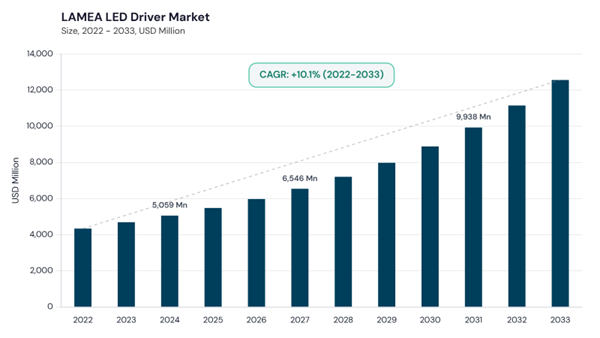
The Brazil market dominated the LAMEA LED Driver Market by country in 2025, and is expected to continue to be a dominant market till 2030, thereby achieving a market value of USD 1.80 billion by 2030. The Argentina market is expected to witness a CAGR of 11.9% during 2026-2030. Additionally, the UAE market is expected to witness a CAGR of 9.8% during 2026-2030. Brazil and Saudi Arabia led the LAMEA LED Driver Market by Country with strong market shares in 2025 due to increasing smart infrastructure projects, energy-efficient lighting adoption, and commercial construction activities.
The LAMEA LED driver market is witnessing substantial growth driven by rapid urbanization, increasing infrastructure modernization, rising adoption of energy-efficient lighting systems, and expanding smart city initiatives across Latin America, the Middle East, and Africa. Governments across the region are implementing energy conservation regulations and sustainability programs that encourage the replacement of traditional lighting systems with advanced LED technologies integrated with intelligent driver solutions. The growing need for reliable and efficient lighting infrastructure across residential, commercial, industrial, and public sectors is significantly accelerating demand for LED drivers throughout the region.
The market is further supported by rising investments in transportation infrastructure, smart commercial buildings, industrial facilities, and connected urban developments, particularly in countries such as Brazil, Saudi Arabia, UAE, and South Africa. Increasing deployment of smart street lighting systems, intelligent building automation technologies, and IoT-enabled lighting control platforms is creating strong demand for programmable and energy-efficient LED driver solutions. Moreover, growing automotive manufacturing activities, rising penetration of electric vehicles, and increasing adoption of adaptive lighting technologies are contributing to market expansion across the region.
Supply Type Outlook
Based on Supply Type, the market is segmented into Constant Current and Constant Voltage. The Constant Current segment dominated the LAMEA LED Driver Market in 2025 owing to increasing deployment across industrial infrastructure, commercial buildings, transportation facilities, and outdoor lighting systems requiring stable current regulation and high operational efficiency. Meanwhile, the Constant Voltage segment is expected to witness considerable growth by 2030 due to rising adoption across decorative lighting systems, LED strips, residential smart lighting applications, and signage installations.Component Outlook
Based on Component, the market is segmented into Driver IC, Discrete Components, and Other Components. The Discrete Components segment dominated the LAMEA LED Driver Market with a market value of USD 2.04 billion in 2025 and is expected to reach USD 3.37 billion by 2030 owing to increasing utilization across industrial and commercial lighting systems requiring flexible circuit integration and high-power applications. The Driver IC segment is expected to reach USD 3.83 billion by 2030 due to rising demand for integrated semiconductor-based lighting control technologies and smart dimming functionalities.Luminaire Component Outlook
Based on Luminaire Component, the market is segmented into LED Lamps and LED Luminaires. The LED Luminaires segment dominated the market in 2025 owing to increasing deployment in commercial infrastructure, industrial facilities, public lighting systems, and transportation projects. The LED Lamps segment is expected to witness strong growth through 2030 due to rising replacement demand across residential applications and growing consumer awareness regarding energy-efficient lighting technologies.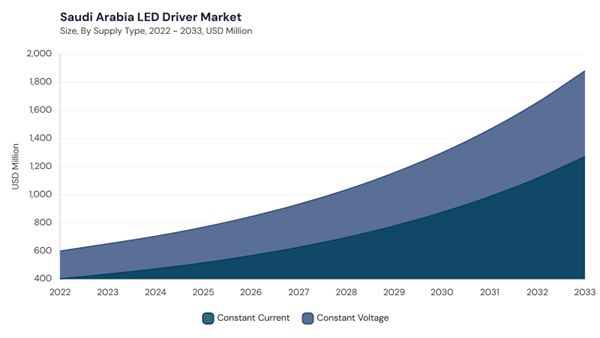
Installation Type Outlook
Based on Installation Type, the market is segmented into Internal LED Drivers and External LED Drivers. The Internal LED Drivers segment recorded significant adoption in 2025 due to increasing deployment of compact lighting systems across residential and small commercial applications. Meanwhile, the External LED Drivers segment is projected to experience strong growth by 2030 owing to increasing demand across industrial lighting systems, street lighting infrastructure, stadiums, warehouses, and large-scale commercial installations requiring enhanced thermal management and operational flexibility.Application Outlook
Based on Application, the market is segmented into Residential Lighting, Commercial Lighting, Industrial Lighting, Automotive, Consumer Electronics, and Other Application. The Residential Lighting segment dominated the LAMEA LED Driver Market in 2025 due to rapid urban housing development, increasing electrification initiatives, and rising adoption of affordable energy-efficient lighting products. The Consumer Electronics segment is expected to reach USD 692.5 million by 2030 owing to increasing integration of LED technologies in televisions, displays, monitors, and portable electronics. The Automotive segment is also expected to witness significant growth due to increasing adoption of LED headlamps, adaptive lighting systems, and electric vehicles across emerging regional markets.Country Outlook
Brazil represents the largest market for LED drivers in LAMEA due to strong infrastructure investments, rapid urbanization, increasing smart city projects, and rising adoption of energy-efficient commercial and residential lighting systems. The country continues to witness strong deployment of intelligent lighting technologies across transportation, retail, and industrial sectors.Saudi Arabia and the UAE are experiencing robust market growth due to rising investments in smart infrastructure, mega construction projects, connected commercial developments, and sustainable urban transformation initiatives aligned with long-term national development strategies.
South Africa is witnessing increasing demand for LED driver technologies owing to infrastructure modernization efforts, expansion of commercial real estate, and growing adoption of energy-efficient industrial lighting systems. Nigeria and Rest of LAMEA are also emerging as high-growth markets due to increasing electrification initiatives, rising urban population, and expanding public infrastructure development activities.
List of Key Companies Profiled
- Signify N.V.
- OSRAM GmbH
- Texas Instruments Incorporated
- Analog Devices, Inc.
- STMicroelectronics N.V.
- Mean Well Enterprises Co., Ltd.
- Inventronics Inc.
- Acuity Brands, Inc.
- Lutron Electronics Co., Inc.
- Cree LED (Wolfspeed, Inc.)
Market Report Segmentation
By Supply Type- Constant Current
- Constant Voltage
- Driver IC
- Discrete Components
- Other Components
- LED Lamps
- LED Luminaires
- Internal LED Drivers
- External LED Drivers
- Residential Lighting
- Commercial Lighting
- Industrial Lighting
- Automotive
- Consumer Electronics
- Other Application
- Brazil
- Argentina
- UAE
- Saudi Arabia
- South Africa
- Nigeria
- Rest of LAMEA
Table of Contents
Chapter 1. LAMEA Market1.1 Market Overview
1.2 Key Factors Impacting Market
1.2.1 Market Drivers
1.2.2 Market Restraints
1.2.3 Market Opportunities
1.2.4 Market Challenges
1.2.5 Market Trends
1.2.6 State of Competition
1.2.7 Market Consolidation
1.2.8 Key Customer Criteria
1.3 Product Life Cycle
1.4 Segmentation By Luminaire Component
1.4.1 LED Lamps
1.4.2 LED Luminaires
1.5 Segmentation By Component
1.5.1 Driver IC
1.5.2 Discrete Components
1.5.3 Other Component
1.6 Segmentation By Supply Type
1.6.1 Constant Current
1.6.2 Constant Voltage
1.7 Segmentation By Installation Type
1.7.1 Integral LED Drivers
1.7.2 Remote LED Drivers
1.8 Segmentation By Application
1.8.1 Residential Lighting
1.8.2 Commercial Lighting
1.8.3 Industrial Lighting
1.8.4 Automotive
1.8.5 Consumer Electronics
1.8.6 Other Application
1.9 Segmentation By Country
1.9.1 Brazil
1.9.1.1 Segmentation By Luminaire Component
1.9.1.1.1 LED Lamps
1.9.1.1.2 LED Luminaires
1.9.1.2 Segmentation By Supply Type
1.9.1.2.1 Constant Current
1.9.1.2.2 Constant Voltage
1.9.1.3 Segmentation By Component
1.9.1.3.1 Driver IC
1.9.1.3.2 Discrete Components
1.9.1.3.3 Other Component
1.9.1.4 Segmentation By Installation Type
1.9.1.4.1 Internal LED Drivers
1.9.1.4.2 External LED Drivers
1.9.1.5 Segmentation By Application
1.9.1.5.1 Residential Lighting
1.9.1.5.2 Commercial Lighting
1.9.1.5.3 Industrial Lighting
1.9.1.5.4 Automotive
1.9.1.5.5 Consumer Electronics
1.9.1.5.6 Other Application
1.9.2 Argentina
1.9.2.1 Segmentation By Luminaire Component
1.9.2.1.1 LED Lamps
1.9.2.1.2 LED Luminaires
1.9.2.2 Segmentation By Supply Type
1.9.2.2.1 Constant Current
1.9.2.2.2 Constant Voltage
1.9.2.3 Segmentation By Component
1.9.2.3.1 Driver IC
1.9.2.3.2 Discrete Components
1.9.2.3.3 Other Component
1.9.2.4 Segmentation By Installation Type
1.9.2.4.1 Internal LED Drivers
1.9.2.4.2 External LED Drivers
1.9.2.5 Segmentation By Application
1.9.2.5.1 Residential Lighting
1.9.2.5.2 Commercial Lighting
1.9.2.5.3 Industrial Lighting
1.9.2.5.4 Automotive
1.9.2.5.5 Consumer Electronics
1.9.2.5.6 Other Application
1.9.3 UAE
1.9.3.1 Segmentation By Luminaire Component
1.9.3.1.1 LED Lamps
1.9.3.1.2 LED Luminaires
1.9.3.2 Segmentation By Supply Type
1.9.3.2.1 Constant Current
1.9.3.2.2 Constant Voltage
1.9.3.3 Segmentation By Component
1.9.3.3.1 Driver IC
1.9.3.3.2 Discrete Components
1.9.3.3.3 Other Component
1.9.3.4 Segmentation By Installation Type
1.9.3.4.1 Internal LED Drivers
1.9.3.4.2 External LED Drivers
1.9.3.5 Segmentation By Application
1.9.3.5.1 Residential Lighting
1.9.3.5.2 Commercial Lighting
1.9.3.5.3 Industrial Lighting
1.9.3.5.4 Automotive
1.9.3.5.5 Consumer Electronics
1.9.3.5.6 Other Application
1.9.4 Saudi Arabia
1.9.4.1 Segmentation By Luminaire Component
1.9.4.1.1 LED Lamps
1.9.4.1.2 LED Luminaires
1.9.4.2 Segmentation By Supply Type
1.9.4.2.1 Constant Current
1.9.4.2.2 Constant Voltage
1.9.4.3 Segmentation By Component
1.9.4.3.1 Driver IC
1.9.4.3.2 Discrete Components
1.9.4.3.3 Other Component
1.9.4.4 Segmentation By Installation Type
1.9.4.4.1 Internal LED Drivers
1.9.4.4.2 External LED Drivers
1.9.4.5 Segmentation By Application
1.9.4.5.1 Residential Lighting
1.9.4.5.2 Commercial Lighting
1.9.4.5.3 Industrial Lighting
1.9.4.5.4 Automotive
1.9.4.5.5 Consumer Electronics
1.9.4.5.6 Other Application
1.9.5 South Africa
1.9.5.1 Segmentation By Luminaire Component
1.9.5.1.1 LED Lamps
1.9.5.1.2 LED Luminaires
1.9.5.2 Segmentation By Supply Type
1.9.5.2.1 Constant Current
1.9.5.2.2 Constant Voltage
1.9.5.3 Segmentation By Component
1.9.5.3.1 Driver IC
1.9.5.3.2 Discrete Components
1.9.5.3.3 Other Component
1.9.5.4 Segmentation By Installation Type
1.9.5.4.1 Internal LED Drivers
1.9.5.4.2 External LED Drivers
1.9.5.5 Segmentation By Application
1.9.5.5.1 Residential Lighting
1.9.5.5.2 Commercial Lighting
1.9.5.5.3 Industrial Lighting
1.9.5.5.4 Automotive
1.9.5.5.5 Consumer Electronics
1.9.5.5.6 Other Application
1.9.6 Nigeria
1.9.6.1 Segmentation By Luminaire Component
1.9.6.1.1 LED Lamps
1.9.6.1.2 LED Luminaires
1.9.6.2 Segmentation By Supply Type
1.9.6.2.1 Constant Current
1.9.6.2.2 Constant Voltage
1.9.6.3 Segmentation By Component
1.9.6.3.1 Driver IC
1.9.6.3.2 Discrete Components
1.9.6.3.3 Other Component
1.9.6.4 Segmentation By Installation Type
1.9.6.4.1 Internal LED Drivers
1.9.6.4.2 External LED Drivers
1.9.6.5 Segmentation By Application
1.9.6.5.1 Residential Lighting
1.9.6.5.2 Commercial Lighting
1.9.6.5.3 Industrial Lighting
1.9.6.5.4 Automotive
1.9.6.5.5 Consumer Electronics
1.9.6.5.6 Other Application
1.9.7 Rest of LAMEA
1.9.7.1 Segmentation By Luminaire Component
1.9.7.1.1 LED Lamps
1.9.7.1.2 LED Luminaires
1.9.7.2 Segmentation By Supply Type
1.9.7.2.1 Constant Current
1.9.7.2.2 Constant Voltage
1.9.7.3 Segmentation By Component
1.9.7.3.1 Driver IC
1.9.7.3.2 Discrete Components
1.9.7.3.3 Other Component
1.9.7.4 Segmentation By Installation Type
1.9.7.4.1 Internal LED Drivers
1.9.7.4.2 External LED Drivers
1.9.7.5 Segmentation By Application
1.9.7.5.1 Residential Lighting
1.9.7.5.2 Commercial Lighting
1.9.7.5.3 Industrial Lighting
1.9.7.5.4 Automotive
1.9.7.5.5 Consumer Electronics
1.9.7.5.6 Other Application
Chapter 2. Company Snapshot
2.1 Signify N.V.
2.1.1 Business Overview
2.1.2 Key Information
2.1.3 Company Focus
2.1.4 Strategic Insights
2.1.5 Strategy Deployed
2.1.6 Product & Service Portfolio
2.1.7 Capability Overview
2.1.8 Technology & Innovation Focus
2.1.9 Customers / End Users
2.1.10 Competitive Positioning
2.1.11 Key Differentiators
2.1.12 Portfolio Matrix
2.1.13 SWOT Analysis
2.1.14 Future Outlook
2.2 ams-OSRAM AG
2.2.1 Business Overview
2.2.2 Key Information
2.2.3 Company Focus
2.2.4 Strategic Insights
2.2.5 Strategy Deployed
2.2.6 Product & Service Portfolio
2.2.7 Capability Overview
2.2.8 Technology & Innovation Focus
2.2.9 Customers / End Users
2.2.10 Competitive Positioning
2.2.11 Key Differentiators
2.2.12 Portfolio Matrix
2.2.13 SWOT Analysis
2.2.14 Future Outlook
2.3 Acuity Brands, Inc.
2.3.1 Business Overview
2.3.2 Key Information
2.3.3 Company Focus
2.3.4 Strategic Insights
2.3.5 Strategy Deployed
2.3.6 Product & Service Portfolio
2.3.7 Capability Overview
2.3.8 Technology & Innovation Focus
2.3.9 Customers / End Users
2.3.10 Competitive Positioning
2.3.11 Key Differentiators
2.3.12 Portfolio Matrix
2.3.13 SWOT Analysis
2.3.14 Future Outlook
2.4 Hubbell Incorporated
2.4.1 Business Overview
2.4.2 Key Information
2.4.3 Company Focus
2.4.4 Strategic Insights
2.4.5 Strategy Deployed
2.4.6 Product & Service Portfolio
2.4.7 Capability Overview
2.4.8 Technology & Innovation Focus
2.4.9 Customers / End Users
2.4.10 Competitive Positioning
2.4.11 Key Differentiators
2.4.12 Portfolio Matrix
2.4.13 SWOT Analysis
2.4.14 Future Outlook
2.5 Eaton Corporation plc
2.5.1 Business Overview
2.5.2 Key Information
2.5.3 Company Focus
2.5.4 Strategic Insights
2.5.5 Strategy Deployed
2.5.6 Product & Service Portfolio
2.5.7 Capability Overview
2.5.8 Technology & Innovation Focus
2.5.9 Customers / End Users
2.5.10 Competitive Positioning
2.5.11 Key Differentiators
2.5.12 Portfolio Matrix
2.5.13 SWOT Analysis
2.5.14 Future Outlook
2.6 Lutronic GmbH
2.6.1 Business Overview
2.6.2 Key Information
2.6.3 Company Focus
2.6.4 Strategic Insights
2.6.5 Strategy Deployed
2.6.6 Product & Service Portfolio
2.6.7 Capability Overview
2.6.8 Technology & Innovation Focus
2.6.9 Customers / End Users
2.6.10 Competitive Positioning
2.6.11 Key Differentiators
2.6.12 Portfolio Matrix
2.6.13 SWOT Analysis
2.6.14 Future Outlook
2.7 Penguin Solutions, Inc. (Cree LED)
2.7.1 Business Overview
2.7.2 Key Information
2.7.3 Company Focus
2.7.4 Strategic Insights
2.7.5 Strategy Deployed
2.7.6 Product & Service Portfolio
2.7.7 Capability Overview
2.7.8 Technology & Innovation Focus
2.7.9 Customers / End Users
2.7.10 Competitive Positioning
2.7.11 Key Differentiators
2.7.12 Portfolio Matrix
2.7.13 SWOT Analysis
2.7.14 Future Outlook
2.8 MEAN WELL Enterprises Co., Ltd.
2.8.1 Business Overview
2.8.2 Key Information
2.8.3 Company Focus
2.8.4 Strategic Insights
2.8.5 Strategy Deployed
2.8.6 Product & Service Portfolio
2.8.7 Capability Overview
2.8.8 Technology & Innovation Focus
2.8.9 Customers / End Users
2.8.10 Competitive Positioning
2.8.11 Key Differentiators
2.8.12 Portfolio Matrix
2.8.13 SWOT Analysis
2.8.14 Future Outlook
2.9 Inventronics
2.9.1 Business Overview
2.9.2 Key Information
2.9.3 Company Focus
2.9.4 Strategic Insights
2.9.5 Strategy Deployed
2.9.6 Product & Service Portfolio
2.9.7 Capability Overview
2.9.8 Technology & Innovation Focus
2.9.9 Customers / End Users
2.9.10 Competitive Positioning
2.9.11 Key Differentiators
2.9.12 Portfolio Matrix
2.9.13 SWOT Analysis
2.9.14 Future Outlook
2.10 Tridonic GmbH & Co KG
2.10.1 Business Overview
2.10.2 Key Information
2.10.3 Company Focus
2.10.4 Strategic Insights
2.10.5 Strategy Deployed
2.10.6 Product & Service Portfolio
2.10.7 Capability Overview
2.10.8 Technology & Innovation Focus
2.10.9 Customers / End Users
2.10.10 Competitive Positioning
2.10.11 Key Differentiators
2.10.12 Portfolio Matrix
2.10.13 SWOT Analysis
2.10.14 Future Outlook
Companies Mentioned
- Signify N.V.
- OSRAM GmbH
- Texas Instruments Incorporated
- Analog Devices, Inc.
- STMicroelectronics N.V.
- Mean Well Enterprises Co., Ltd.
- Inventronics Inc.
- Acuity Brands, Inc.
- Lutron Electronics Co., Inc.
- Cree LED (Wolfspeed, Inc.)


